
One thing that cannot be excluded when discussing Japanese food culture is ‘tea’. To be more precise, it should be called ‘Japanese tea’.
When we talk about tea drunk in Japan, there are various types such as green tea, barley tea, black tea, and oolong tea, but in today’s article, ‘Japanese tea’ mainly refers to green tea and barley tea.
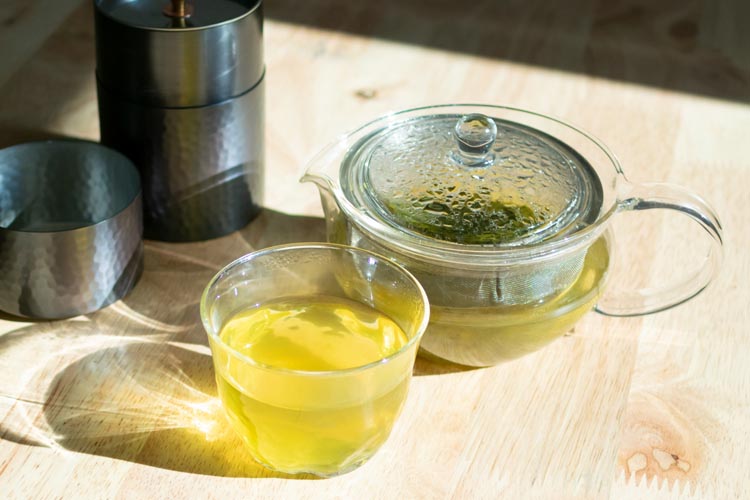
In recent years, the Japanese eating culture has changed considerably, and water is increasingly used instead of tea at mealtimes. However, tea is still a very important beverage choice for the Japanese.
Tea is found in many countries of the world outside Japan, but its taste and aroma vary, as do the frequency and occasions in which it is used.
Eating is the most basic act of human behaviour, so it is easily expressed in culture, but drinking is equally likely to be characterised by national and ethnic characteristics.
This is just my personal speculation, but I think the reason why tea, rather than water, became the drink of choice during meals in Japan is probably because traditional Japanese cuisine has always been light in flavour and designed to bring out the natural flavours of the ingredients, and tea was more suitable for this purpose.
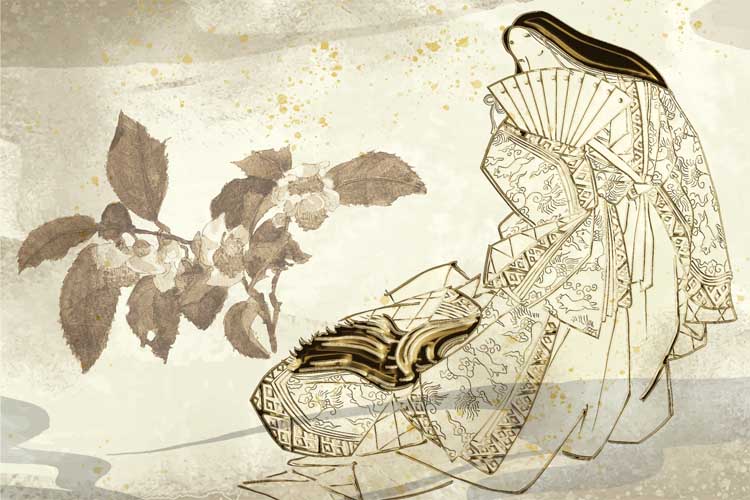
Research into the history of Japanese tea(green tea) shows that it was first recorded in the Heian period (794-1185), 1,200 years ago.
It was brought to Japan by ascetic monks returning from ancient China. However, at that time it was treated as a type of medicine rather than a drink, and was only distributed among the nobility.
Tea cultivation in Japan began in the 12th century, when the high priest “Eisai” of the Rinzai sect (a branch of Buddhism) brought tea plants to Japan.
It first became popular among the lower ranks of the nobility, and then gradually among the warriors. The processing methods also changed to those suitable for use as a drink, and it can be said that the foundations of present-day Japanese tea were laid at this time.
However, Japanese tea at that time had a strong connotation as a hobby and culture, including the preparation and etiquette for drinking it.
With the arrival of a peaceful society in the Edo period(1603-1868), the culture of the common people expanded rapidly and Japanese tea spread throughout the country.
Cultivation and processing methods evolved greatly, and the taste and aroma also developed remarkably during this period. Many people began to use tea as a beverage during meals, establishing a style of Japanese food that continues to this day.
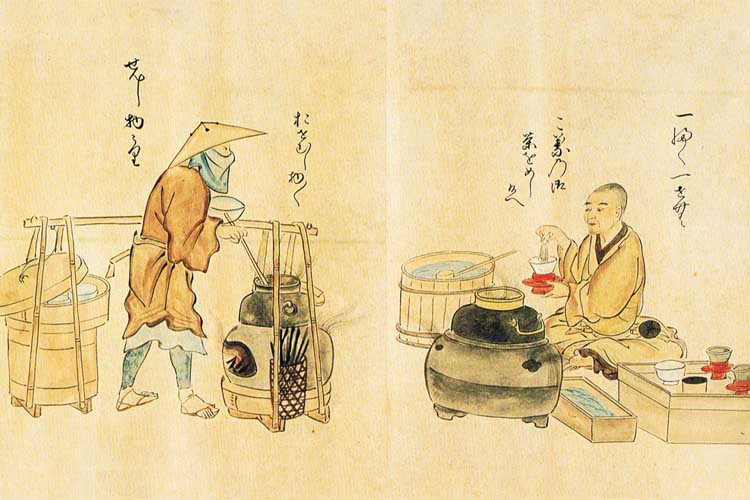
Regions known as famous tea-producing areas were also established during this period, with Shizuoka tea from Shizuoka Prefecture, Uji tea from Kyoto Prefecture, and Sayama tea from Saitama Prefecture being particularly well known.
With the end of the samurai era and the arrival of civilised society in the Meiji era, tea was produced on a larger scale and exported abroad. Tea became an essential part of the Japanese diet and society.
So far, we have been discussing the history of green tea, which is one type of Japanese tea.
Japanese tea can be broadly divided into two categories: green tea and grain tea.
Green tea is made by steaming, kneading, and drying the leaves picked from the tea plant.
In contrast, grain tea is a beverage made by heating and drying wheat, beans, and other grains. Although it is not strictly tea since it does not use tea leaves, it is treated as a type of tea in Japan and other Asian countries.
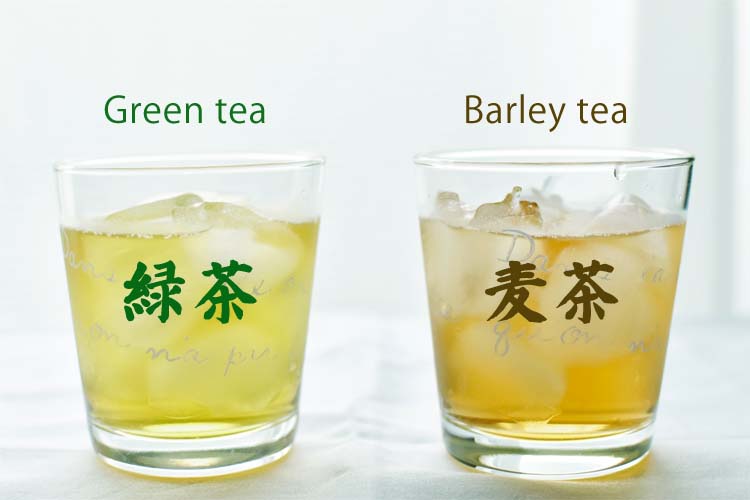
Barley tea is one of the most popular types of grain tea.
It is usually served cold from the refrigerator, and is considered a symbol of summer in Japan, with consumption peaking between June and September.
It has a mild taste and a fragrant aroma, making it easy to drink even for people overseas who dislike the bitterness and acidity of green tea.
It does not contain caffeine and is rich in polyphenols and dietary fibre, which are beneficial to health.
Barley tea is said to have a history as long as that of green tea.
Due to the effects of global warming, Japanese summers have become increasingly hot in recent years, but barley tea is also an essential item for Japanese people to survive the harsh heat.
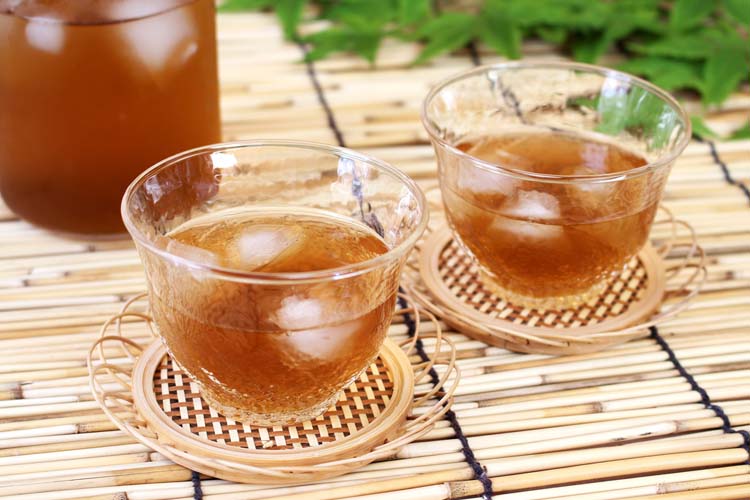
If you are planning to visit Japan during the summer, please try barley tea.
Ice-cold barley tea may have the potential to awaken your mind and body.(^^)
One last thing…
There is a type of tea in Japan called ‘matcha.’
It is a type of green tea, but it is rarely drunk on a daily basis. This is because, in modern times, matcha is only used in the traditional ceremony of ‘茶道 / tea ceremony.’
It is also sold to the general public, so some people drink it during tea time, but almost no one drinks it with meals. This is mainly because it has a high viscosity and a strong flavour.
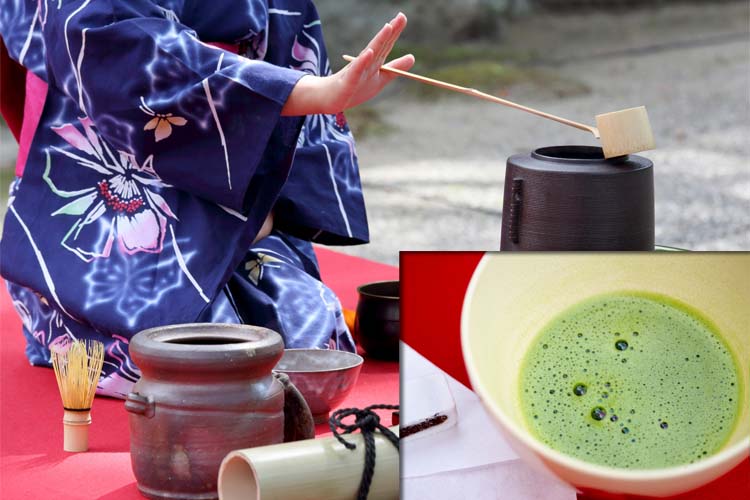
Some people who choose Japan as their travel destination may want to experience traditional Japanese customs, so they may be looking for ‘matcha events’ such as “chanoyu” and ‘nodate.’
However, if possible, we recommend ‘matcha events’ during the cooler months of late March to May, or October to November.
This is because matcha is not considered a suitable drink for the harsh summer heat.