
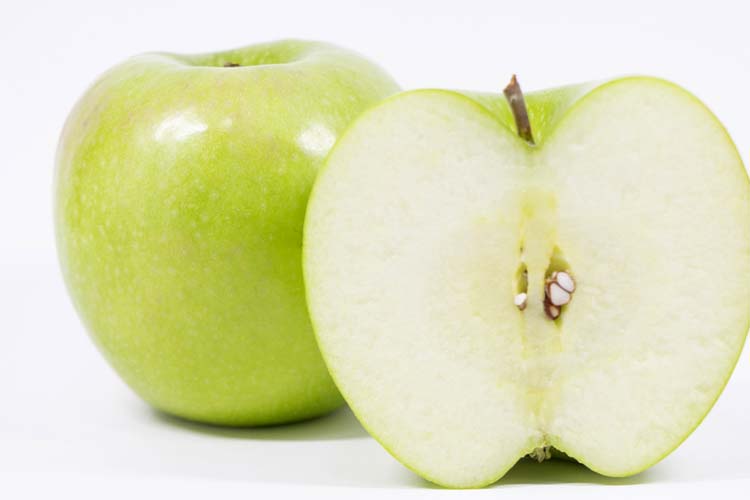
The apple in the photograph looks wonderfully fresh and delicious.
By the way, what colour does this apple appear to you?
What do you call apples like the one in the image in your country?
You might be surprised, but in Japan we call this a ‘ao ringo / blue apple’.
Now, the next image. It’s a rather old traffic signal from about 50 years ago, but the lamp currently lit is called a ‘ao shingō / blue light’ in Japan.
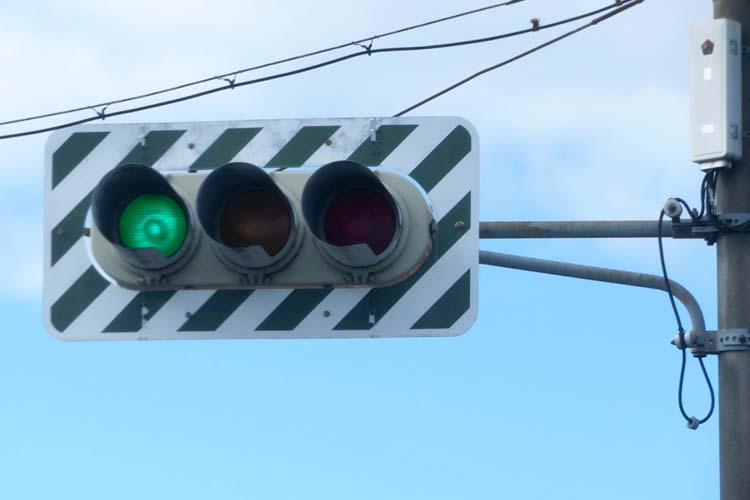
Are all Japanese people colour blind…?
Naturally, there is nothing abnormal about Japanese colour perception.
It is common knowledge that blue and green are distinct colours for Japanese people too, and they possess the ability to distinguish between them just as people in other countries do.
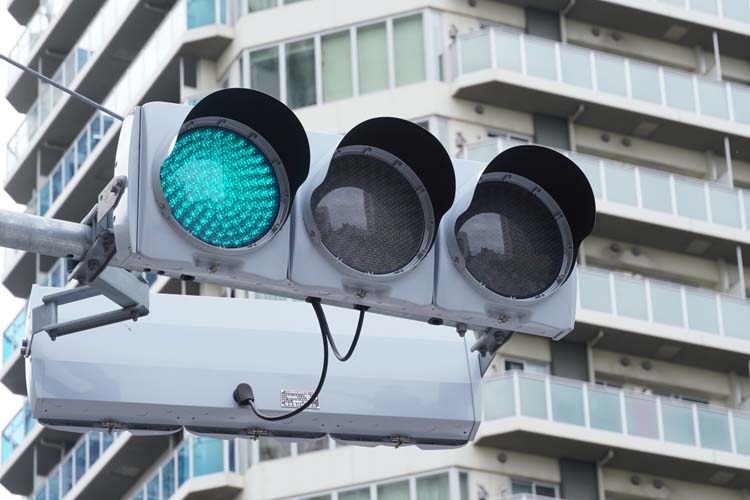
Moreover, in recent years… as shown in the image below, traffic signals have been replaced with blue lamps to align with the terminology.
Nevertheless, some traditional terms persist, such as ‘ao ringo / blue apple’. One might say that the distinction between blue and green was more ambiguous the further back in time one goes.
So why does this confusion between blue and green occur in Japan? It stems from cultural practices and circumstances dating back over a thousand years.
In the culture of that era, colour expression appears to have been rather crude.
Naturally, both now and a thousand years ago, diverse colours existed around people. However, dyeing techniques were still underdeveloped at that time, and most ordinary folk did not lead lives where they could pay attention to subtle colour differences.
Only the aristocracy could afford expensive dyes, enabling them to utilise a somewhat wider range of colours in garments such as kimonos.
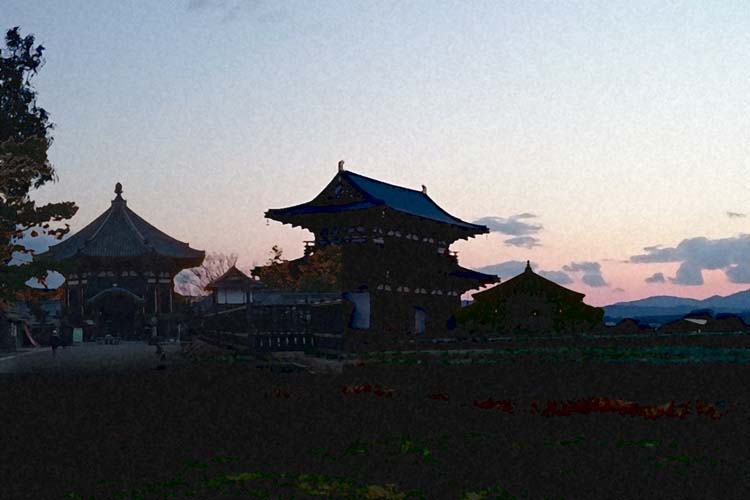
The aristocratic rank system first established in Japan in the year 604 assigned colours to each of its twelve grades, with the basic colours being, from highest to lowest: purple, blue, red, yellow, white, and black.
(The secondary ranks were assigned light purple, light blue, light red, light yellow, ivory, and light grey.)
Even the aristocracy could only freely handle that limited number of colours.
Even though nature offers a multitude of colours, if we cannot utilise many of them in our daily lives, our appreciation for colour will naturally remain limited.
It is said that at that time, only four colours—red, blue, white, and black—were clearly used as colour names. Furthermore, within these four colours, white and black were apparently closer to expressions of brightness, so in practice it was effectively just red and blue.
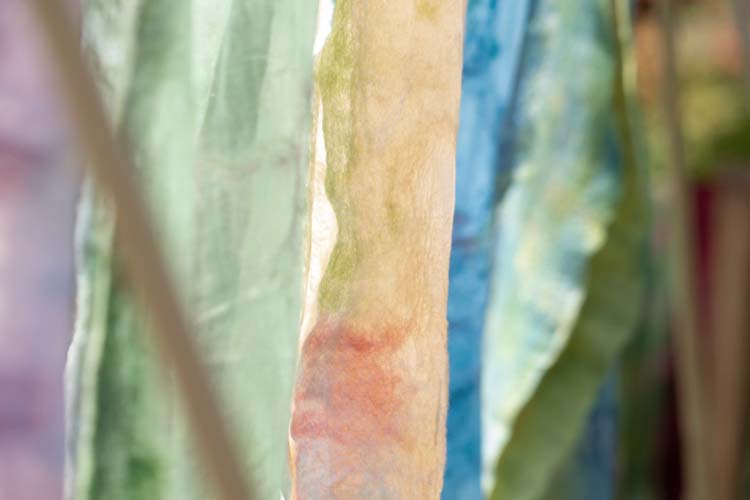
To be a little more specific, red, orange, yellow and purple were all grouped under red, while green, blue and indigo were all grouped under blue.
This colour classification seems incredibly crude by today’s standards, but it may well have reflected people’s perceptions in an era when achieving the vivid hues we see today was impossible.
Over the subsequent 200 to 400 years (around the 11th century AD), dyeing techniques evolved, enabling the use of a wider range of colours and leading to an increase in the number of colour names. This marked the arrival of the colourful Heian period.
Several centuries later, during the Edo period (17th–19th centuries), as diverse colour usage became widespread in everyday life, colour culture also advanced rapidly.
Then, in the Meiji era (1868–1912), a period of great transformation for Japan, the influx of synthetic dyes and colour culture from overseas paved the way for the tens of millions of colours we recognise today.
And you may already have noticed.
Even so, fragments of that ancient culture of colour perception remain in Japan.
Most of it has been lost, but particularly regarding blue, there is still a tendency to group both blue and green under the umbrella term ‘blue’.
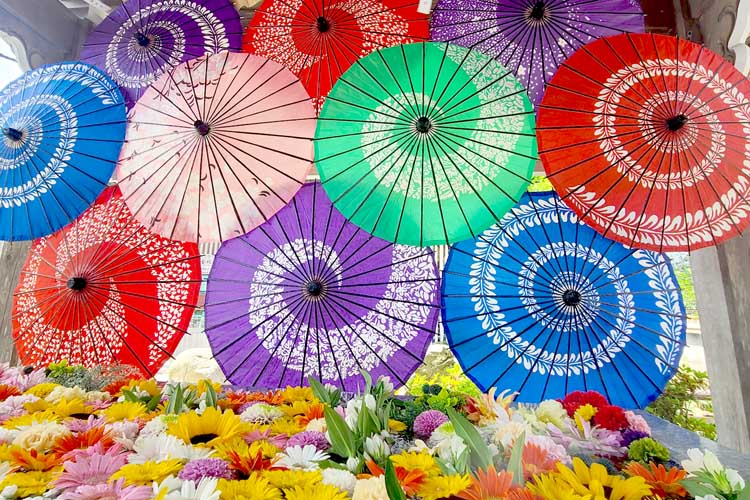
Admittedly, no Japanese person would describe orange or pink as red.
Yet, concerning blue, memories from 1400 years ago still linger in the recesses of the mind.
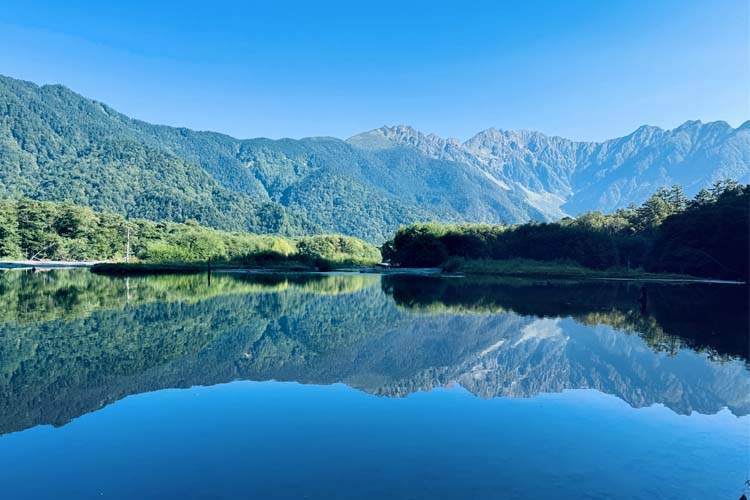
Why blue alone? The reason is unclear, but it likely stems from the colours and beauty found in nature.
「森の木々が青々としている。/ The forest trees are vividly blue.」
(The trees in the forest are lush and green.)
「青菜がみずみずしい。/ The blue vegetables are fresh and juicy.」
(The green vegetables are fresh and crisp.)
The Japanese call the sea blue, the mountains and forests blue, the green caterpillar a blue insect, and the green apple a blue apple.
It is a peculiar custom not found in other countries, but I should be grateful if you could bear in mind that the Japanese term ‘blue’ occasionally carries such connotations.
Does your country also possess unique linguistic and colour cultures…?
This concludes our articles for this year.
Updates will resume from 7 January in the New Year 2026.
Thank you for visiting INABANA.jp throughout the year.
Wishing you all a wonderful New Year.