
In the snow country of Echigo, where Bokushi was born and raised, everyone experienced and knew the ordinary way of life firsthand. Yet in Edo, no one knew such things…
From a modern perspective, one might understand, “Ah, that might have been the case in such an old era,” but for Bokushi at that time, it was a considerable culture shock.
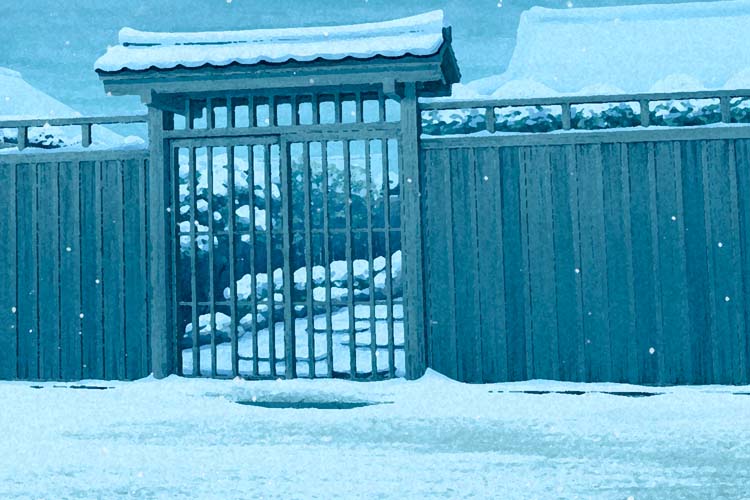
What is common sense to oneself is not necessarily common sense to others.
This is an undeniable fact, yet people find it difficult to accept this truth and are often bewildered when confronted with it.
Bokushi wished to share the climate and way of life in snow country with as many people as possible.
With this strong conviction, he returned to his hometown to compile his knowledge into a book, gathering extensive information not only from his own understanding but also through various connections.
As mentioned in the previous instalment, this encompassed not merely a superficial account of the snow country’s environment, but also scientific research available at the time. He persevered with this writing while diligently managing his primary occupation as a kimono merchant.
After approximately eight years of writing, Bokushi finally completed his book and once again travelled to Edo to visit publishers and conduct numerous negotiations.
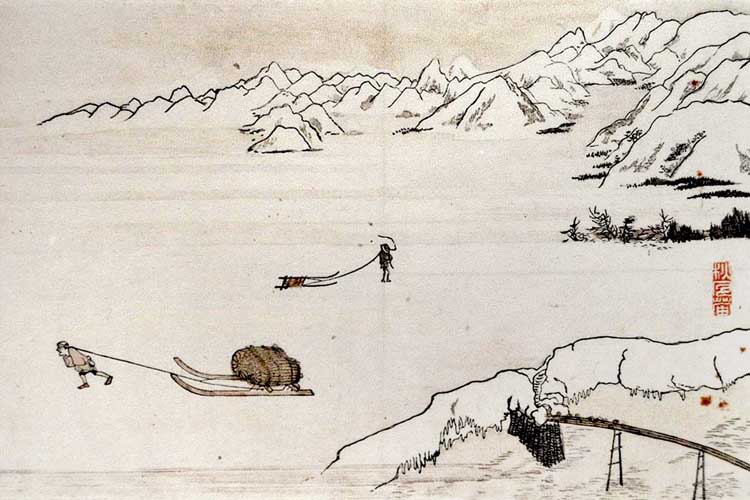
However, no publisher was willing to take on Bokushi’s work.
Bokushi’s writings would be termed “local history” in modern terms, and such books were not yet commonplace at the time.
From the publishers’ perspective, they could not take on such an odd book when they had no idea how well it might sell.
Bokushi’s writings were stalled before they could even be published.
Nevertheless, Bokushi could not bring himself to abandon his publishing aspirations. He approached acquaintances ’prominent writers and artists’ asking them to intercede with publishers on his behalf.
They read Bokushi’s manuscript and were impressed by its intriguing content.
They kindly undertook to lobby the publishers for him, but the publishers still refused to give their approval.
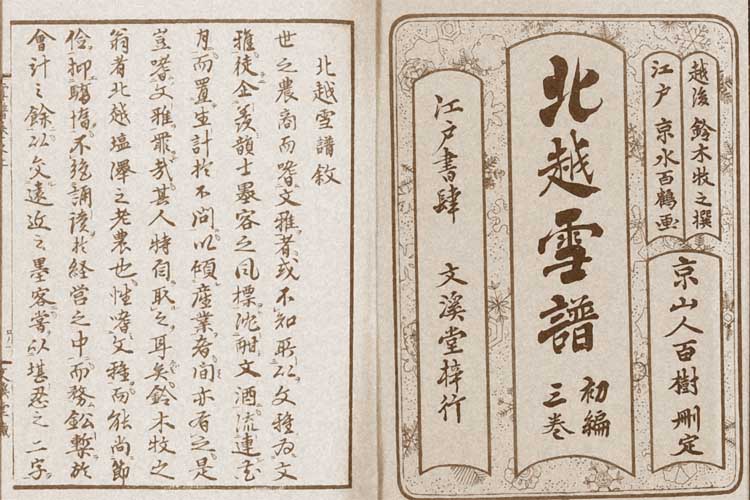
Disappointed by the lack of discernment among Edo publishers, Bokushi returned to his hometown for a time, yet he never abandoned his dream of publishing.
Back at his family home, he worked on the sequel alongside his regular employment. Gathering diverse information from across Echigo Province, he added numerous new entries categorised by subject.
Over the years, these grew into a total of seven volumes: three volumes comprising the first part and four volumes comprising the second part.
Eight years later, having completed the supplementary edition, Bokushi once again made his way to Edo. He had travelled there several times before on business, but this time he tried to secure publication by relying on the connections he had made during those visits.
Yet this time too, matters proved far from straightforward. While many cultured individuals read Bokushi’s Hokuetsu Seppu with keen interest and introduced it to publishers, the publishers themselves proved reluctant to publish it.
At his wits’ end, Bokushi left Edo and journeyed as far as Osaka, planning to publish there. This venture initially sparked interest from an intermediary and enthusiasm from a publisher, but it came to nothing when the intermediary died of illness.
Time passed without much luck coming his way; publication remained elusive, and Bokushi grew older. Just as he began to think it was about time to give up, a visitor came to see him.
It was the brother of the writer whose connections Bokushi had once relied upon to approach publishers. He said he would help push for publication.
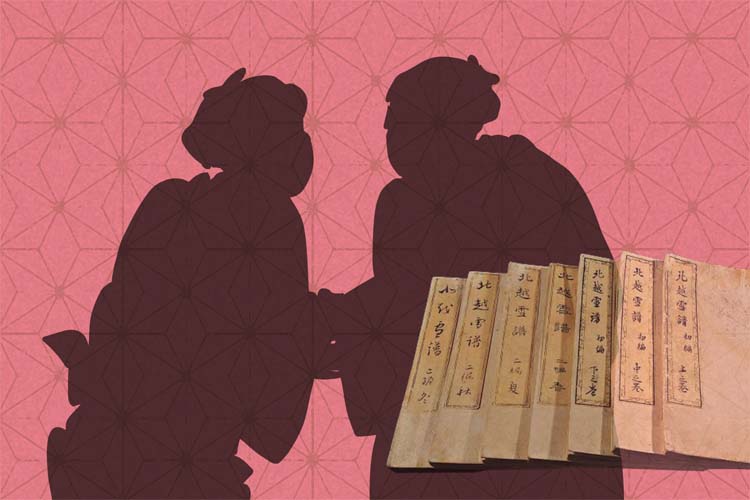
Following repeated discussions between the intermediary who proposed it, the publisher, and Bokushi himself, it was finally decided that Hokuetsu Seppu would be published, albeit in a small print run.
Thirty years had passed since Bokushi had resolved in his heart to publish this chronicle of the snow country that was his homeland.
It is an ironic phenomenon occasionally seen in many people’s lives: while striving desperately to achieve a goal, it often remains elusive; yet when one finally exhausts their strength and considers resting, the dream is at last realised.
It is an ironic phenomenon occasionally seen in many people’s lives, but regardless, Bokushi’s joy at the fulfilment of his great wish must have been profound.
In modern times, the barriers to self-publishing have lowered considerably.
With the internet and social media, opportunities for individuals to share their creative work have expanded more than ever before.
However, until about thirty years ago, self-publishing remained quite challenging, and two hundred years ago it would have been an extremely difficult undertaking.
In an era when self-publishing was scarcely conceivable, Bokushi’s passion in dedicating thirty years to finally achieving publication must have been nothing short of a life-staking endeavour.
If you call that irony, then here’s another irony.
Bokushi’s Hokuetsu Seppu, finally published, apparently defied the publisher’s expectations the moment it hit the shelves and became widely known, sparking huge interest and becoming a massive bestseller.
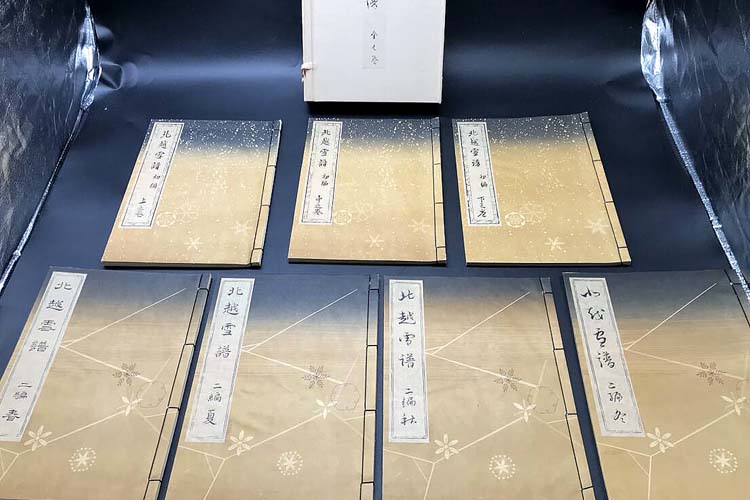
The initial print run sold out in no time, necessitating multiple reprints almost immediately.
For those living in regions without snowfall, including Edo, the customs and folklore of snow country must have seemed utterly novel. Reading about them, it must have felt like delving into tales from another world, filled with wonder and amazement.
When something entirely new appears in the world, its value is often slow to be recognised.
In an era dominated by storybooks, comic tales, and books dealing in romantic intrigue, it was perhaps inevitable that works like local histories—which carried a somewhat scholarly air—were deemed uninteresting to anyone.
Yet, fascinating topics are often hidden within fields that appear uninteresting at first glance, and arguments previously dismissed may unexpectedly contain something of great importance.
To know, to seek to know—is this not the most fundamental and most captivating of the “possibilities” granted to humankind…?
Next time, I shall cover the topic of “Hokuetsu Seppu” one last time before concluding…