
This week we had intended to publish the second part of “The Snow Man and the Snow Country Man”, but we have decided to change our plans at short notice. Instead, we wish to provide information on the recent problem of bear sightings and the damage they cause in Japan, along with countermeasures.
In recent years, Japan has seen an increase in incidents where encounters between bears inhabiting mountainous areas and hikers have resulted in tragic outcomes. Such incidents have risen year on year, with damage surging particularly sharply this year.
While encounters with bears were previously confined to mountainous areas, recent reports indicate bears are increasingly venturing into towns and villages, causing anxiety among local residents.
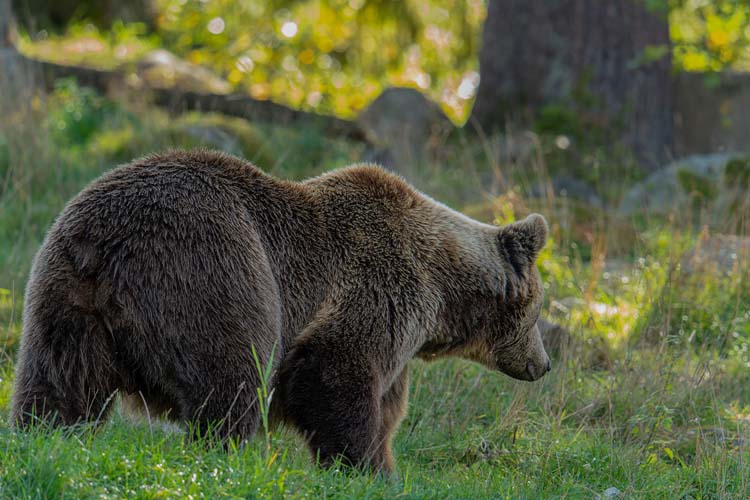
The bears that appear in Japan are mainly Asian black bears or brown bears.
Reports indicate that the significant increase in bear sightings over the past two to three years is largely attributable to a marked decline in the growth of acorns, a key food source for bears, caused by recent climatic fluctuations.
Consequently, bears descending to the foothills in search of dwindling food supplies have begun ravaging crops in human-cultivated fields, recognising these areas as feeding grounds.
Originally timid creatures that should avoid encounters with humans, this trend has caused bears to expand their range to five to ten times its previous size. They now frequently encounter people and are even becoming less fearful of humans.
From January to October 2025, at least 200 people suffered harm from bears, with 12 fatalities among them. This represents a doubling of the previous highest annual figure of six fatalities recorded in 2023.
As for bear sightings, Iwate Prefecture alone recorded 3,453 incidents this year, and the nationwide total may well approach 10,000.
(A bear that entered the grounds of a primary school)
At present, the regions where bear sightings are most frequently reported are primarily the northern parts of the Japanese archipelago, including Hokkaido and the Tōhoku region. However, sightings are also frequently reported in the northern parts of the Chūbu region and in the mountainous areas of the Kansai region, including Kyoto.
In areas where sightings are frequently reported, hunters maintain vigilance and the Self-Defence Forces provide cooperative deployments, though the effectiveness of these measures remains limited.
To avoid such incidents, the most important thing is simply to avoid approaching areas where you might encounter bears. As mentioned earlier, they have been venturing into towns in recent years, so it would be wise to steer clear not only of mountainous regions but also, if possible, of areas close to mountains.
However, if you absolutely must visit such places for tourism, work, or other reasons, carrying bear bells or a radio capable of producing loud sounds could be one precautionary measure.
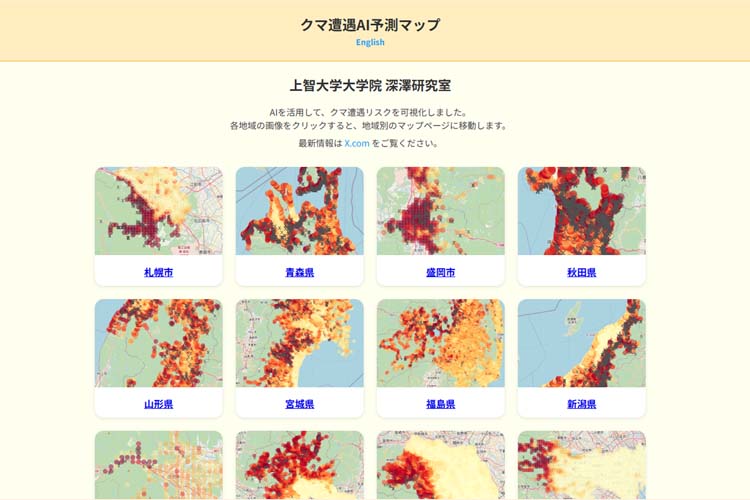
Furthermore, utilising the『Bear AI Prediction Map』recently developed at Sophia University in Japan to anticipate bear sightings in advance may prove an effective measure.
(At present, the “Bear AI Prediction Map” is not available in Japanese. Please use a browser or translation app to access it.)
The『Bear AI Prediction Map』does not merely aggregate bear sighting reports. It incorporates mountain terrain, weather conditions, and information on the distribution of trees bearing edible fruits, overlaying this data with AI to generate predictions of future bear activity. It is reported to have achieved a considerable number of accurate predictions.
When visiting the mountains, please use designated paths and avoid straying onto side trails or into thickets. Do not leave any rubbish behind; take all waste with you. Under no circumstances should you engage in any behaviour that might lead to feeding wild animals.
Bears are inherently docile creatures, but once they recognise a hunting ground or prey, their determination to pursue it is beyond imagination.
To put it rather starkly, human beings are creatures who, simply by existing and engaging in social activities, inevitably cause some degree of disturbance to nature.
Such conflicts between humanity and nature, observable not only in Japan but worldwide, can often be traced back to human actions. As lies at the heart of Japan’s Shinto faith, nature is both a source of blessings for humankind and a formidable force capable of bringing about our destruction.
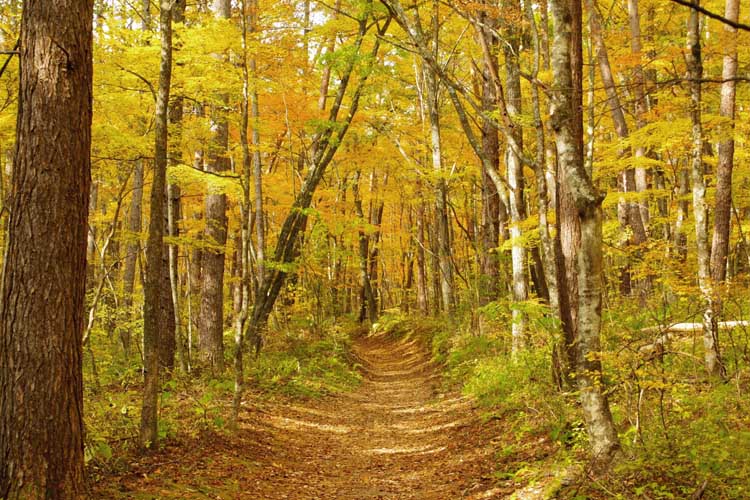
That said, when you suddenly come face to face with a bear on a mountain path or in town, there is no time to ponder such thoughts at leisure.
Above all, prior measures to avoid encountering the threat are paramount.
On that basis, is it not vital to maintain an attitude towards the relationship between humans and nature – one of gratitude and reverence – in our daily lives? The existence of animals is not solely about exclaiming, ‘How cute! How adorable!’
We wish you a safe and enjoyable trip into the countryside…