
Japan is the only country in the world that uses the official ‘Gengō / era name’.
In general, the western calendar is often used, and the era name and the western calendar are used according to the situation at hand.
(western calendar≈A.D.)
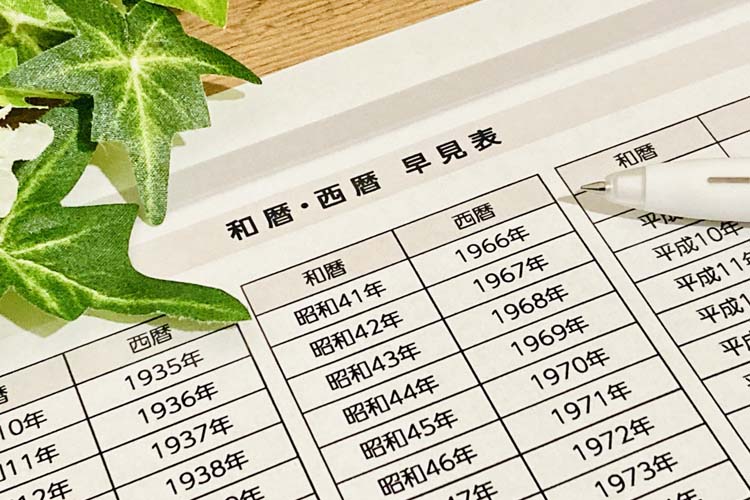
Conversion Table for Japanese Era Names and Western Calendar Years
Taiwan/Republic of China and North Korea also use their own year numbers together with the western calendar, but these are based on the year of the establishment of the state. The situation is therefore slightly different from that of Japan.
Many Muslim countries use the ‘Islamic calendar / Hijra calendar’ in conjunction with the ‘Islamic calendar / Hijra calendar’ in terms of religious observances and customs of life, which is a calendar system. Japan also used a ‘lunar-solar calendar’ until 1872.
A distinctive feature of the Japanese era name is that it is based on the Emperor System.
The 明治 / Meiji era began in October 1868 when Mutsuhito, then Crown Prince, acceded to the throne as Emperor. Basically, emperors are not called by their first names, but are referred to as “◯◯ Emperor” in combination with the name of the era. In this case, he was called “Emperor Meiji”.
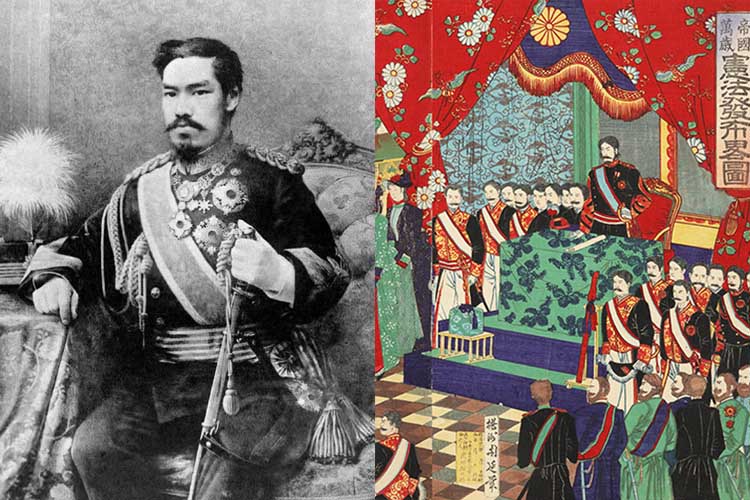
Emperor Meiji Reign: 13 February 1867 – 30 July 1912
When the Meiji Emperor died, his crown prince ascended to the throne and the era name was replaced by a new one. The next generation after “Emperor Meiji” was the 大正 / Taisho Era(30 July 1912 – 25 December 1926), or “Emperor Taisho”.
After the Taisho Era came the 昭和 / Showa Era (25 December 1926 – 7 January 1989), which experienced World War II (known in Japan as the Pacific War), defeat and reconstruction.
Until the war, the Emperor was the supreme leader of the state with a certain degree of real power, but after the war he relinquished that position and became the symbolic and spiritual centre of the nation by declaring himself the ‘human emperor’, dispelling the deification of the Emperor that had existed until then.
This was followed by the 平成 / Heisei Era (8 January 1989 – 30 April 2019), and after 30 April 2019 the current 令和 / Reiwa Era continues.
The first time an era name was used in Japan was in 645 AD, almost 1,400 years ago. The era name 大化 / Taika was used.
Taika means ‘great change’.
This was a time of extremely significant political change and renewal of the social system, and the name was probably given in the hope that the era would undergo such a transformation.
Taika was the first, and the current era name, Reiwa, is the 248th.
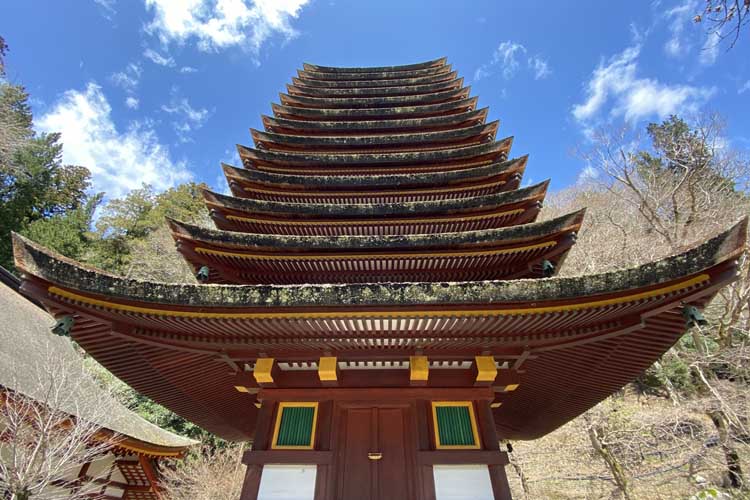
The era name basically represents the period from the accession to the abdication of the emperor of that era.
However, in the past, there have been a few irregularities, such as changing the era name several times during the reign or having several emperors in one era name.
This is the reason why the number of eras to date (248) and the number of emperors (126) do not quite match.
The shortest era name period was only 74 days.
The longest era name period was 64 years and 14 days (Showa).
Two year names coexist within a single country.
Even documents and procedures are filled in differently in each case and are not standardised.
For several decades, there have been several discussions to unify the calendar used in the country to the western calendar, but each time no agreement has been reached.
Although it comes up for discussion, a fairly large proportion of the population rejects the unification of the A.D. (ERA name continuity group – 80%, Western unification group – 10%)
Why do the Japanese continue to use such a complicated system?

There is no clear answer to this question.
One expected reason is the convenience of being able to recall roughly the aspect of the period or the status of the generation just by hearing the era name, since the era name is a year number representing a certain period of time, as opposed to the western calendar, which runs continuously from ‘1’ all the way to the present day.
Another reason is that the name “era” is strongly associated with the Emperor System.
Although few people in modern Japan consider the Emperor to be a god, and there are more than a few who argue that the Emperor System is unnecessary, for many Japanese the Emperor System is still a symbol of the state and dignity.
Although the current Emperor seems to be a mere figure who performs his official duties, visits victims of disasters and gives congratulatory speeches at the beginning of the year, he is still a spiritual pillar for the people.
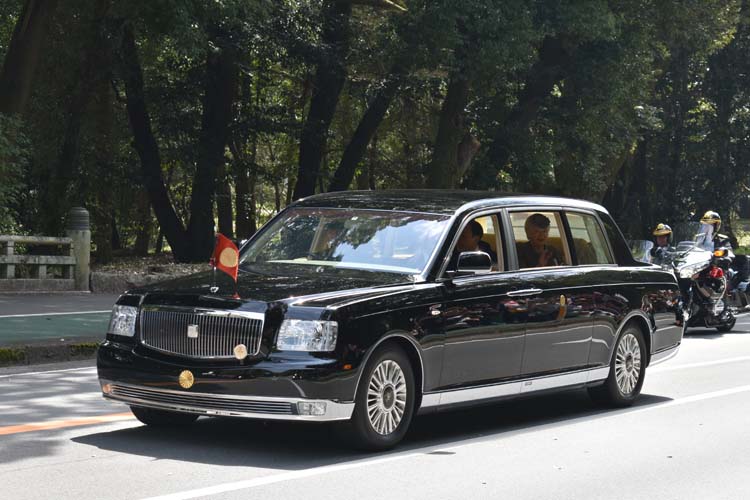
In the modern age, where rational thinking takes precedence, the use of year names may one day be unified with the western calendar, and the era name may become a mere formality.
However, until that day comes, both the era name and the western calendar will continue to be used in Japan.
Finally… As the title says, I was born in Showa 37(1962).
I am now old enough to be considered a first generation old.
And to continue, I was born on 14 February.
It is a joy to have a birthday on a happy day, but It was a shame when I was younger that birthday celebrations and Valentine’s Day celebrations had to be done in one day and could only be enjoyed once. (^_^;)