Nagasaki Prefecture lies in the Kyushu region of southwestern Japan. Its proximity to the Asian mainland and its large bays meant it served as a trading point with the continent since ancient times. Whilst Japan maintained its isolationist policy for over 200 years during the Edo period, Nagasaki was the sole location within the country where trade with foreign nations was permitted.
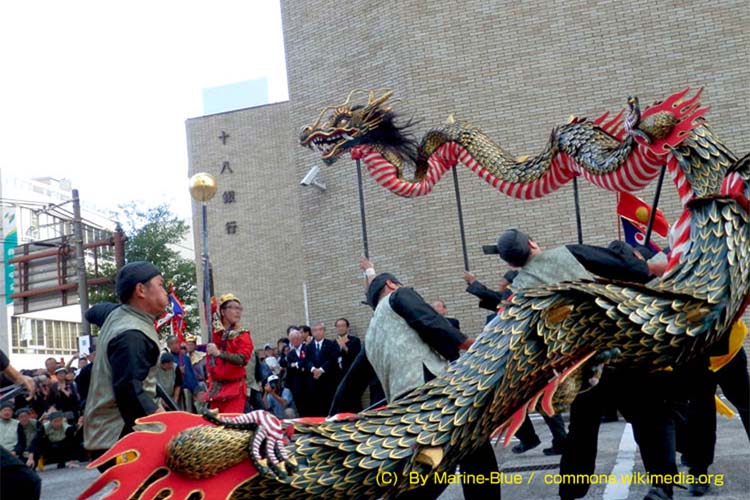
Nagasaki Kunchi Festival
Consequently, the city of Nagasaki still retains traces of foreign cultures to this day.
The grand festival known as the Nagasaki Kunchi, held annually in early October, is a Japanese event yet a rare one where the influence of ancient continental culture remains strongly visible.
By the mid-19th century, when the policy of national isolation was lifted, ports beyond Nagasaki—such as Yokohama in Kanagawa Prefecture and Kobe in Hyogo Prefecture—were opened to foreign nations, leading to a significant influx of foreign culture.
At that time, foreign settlements were established in these towns, and the conditions for foreigners to enter and live there gradually expanded. This is why a distinct foreign character has taken root in these towns, persisting to this day.
I live in Wakayama City, roughly in the central part of Japan. Driving about two hours northwest from here brings you to Kobe City.
Drawn by the scenery of its major trading port and its outstanding cultural offerings, I have visited many times with my wife since my youth. I recall scouring specialist shops for old analogue records while my wife strolled along, gazing at the colourful fashions in the shop windows…
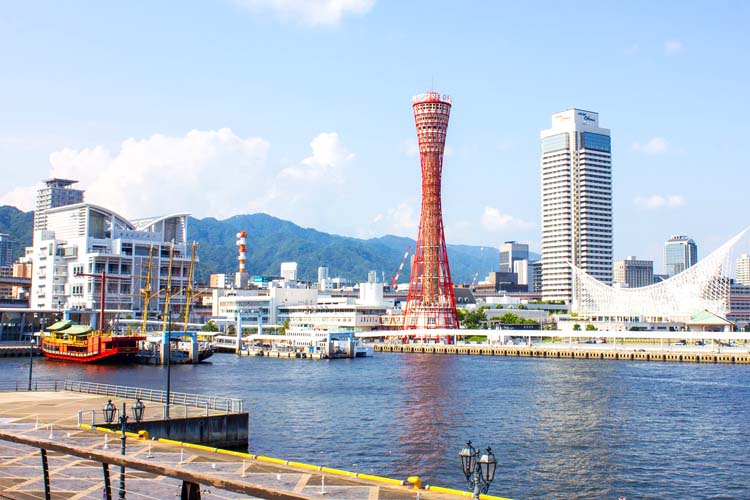
Port of Kobe
Whilst a progressive city, it lacks the hustle and bustle one feels in Tokyo or Osaka; instead, it seems to have a uniquely refreshing atmosphere.
This may stem from the distinctive charm of a port town and the old Western-style buildings district situated to the north of the city.
On the second floor of a building in a corner of central Kobe lies a rather compact gallery.
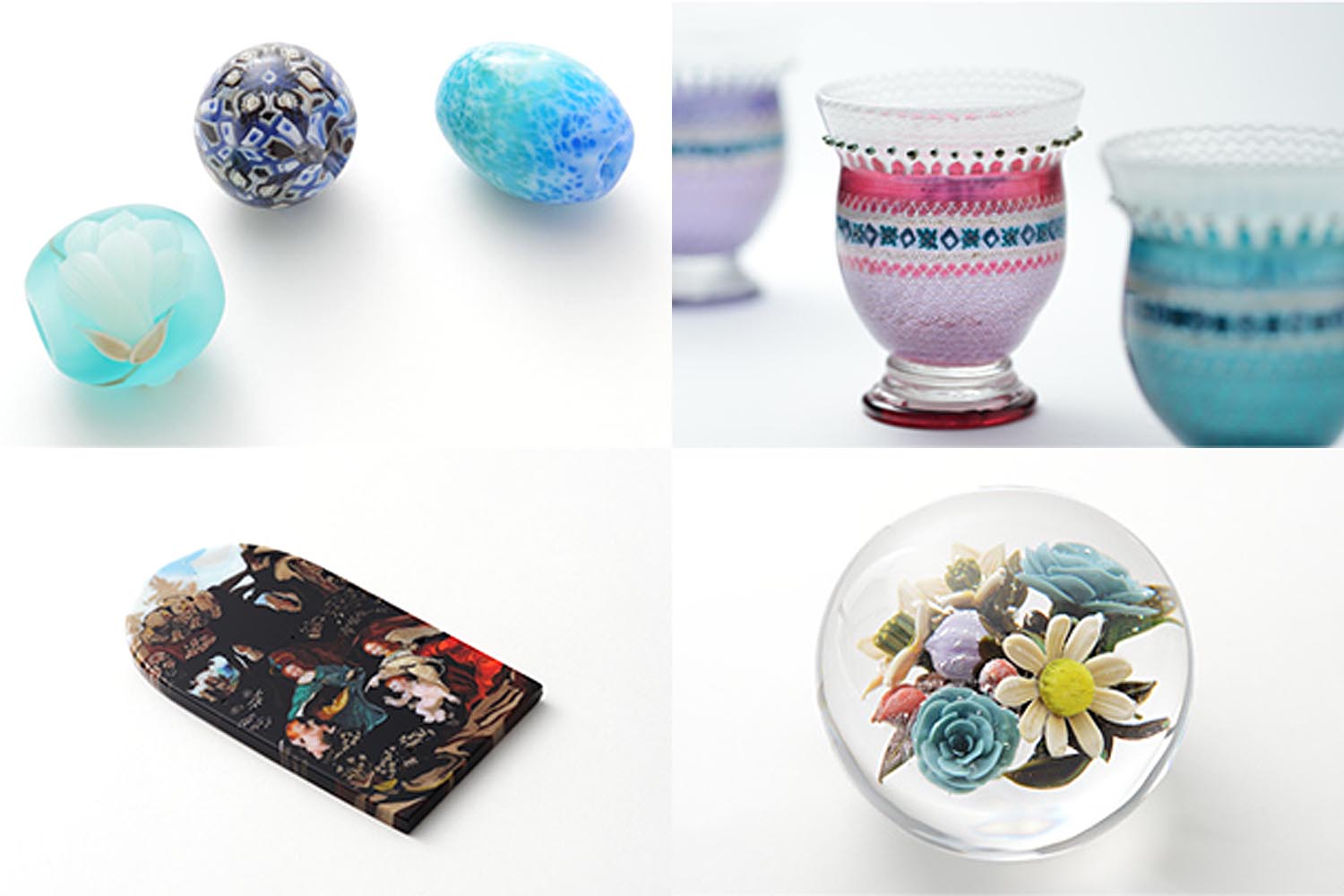
Its name is the “KOBE TomboDama Museum / KOBE Lampwork glass Museum”. It is a gallery and shop specialising in glass crafts of unique beauty.
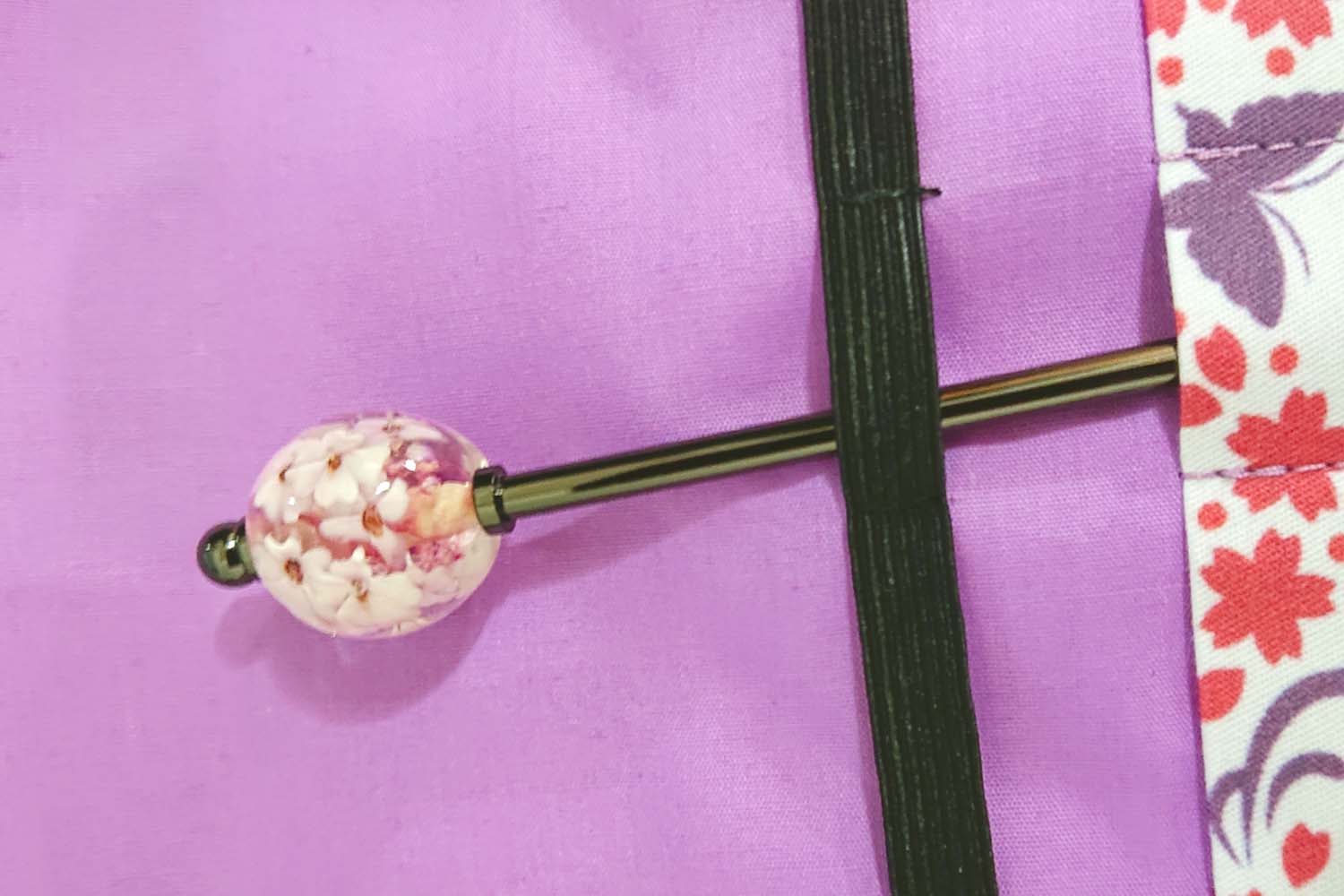
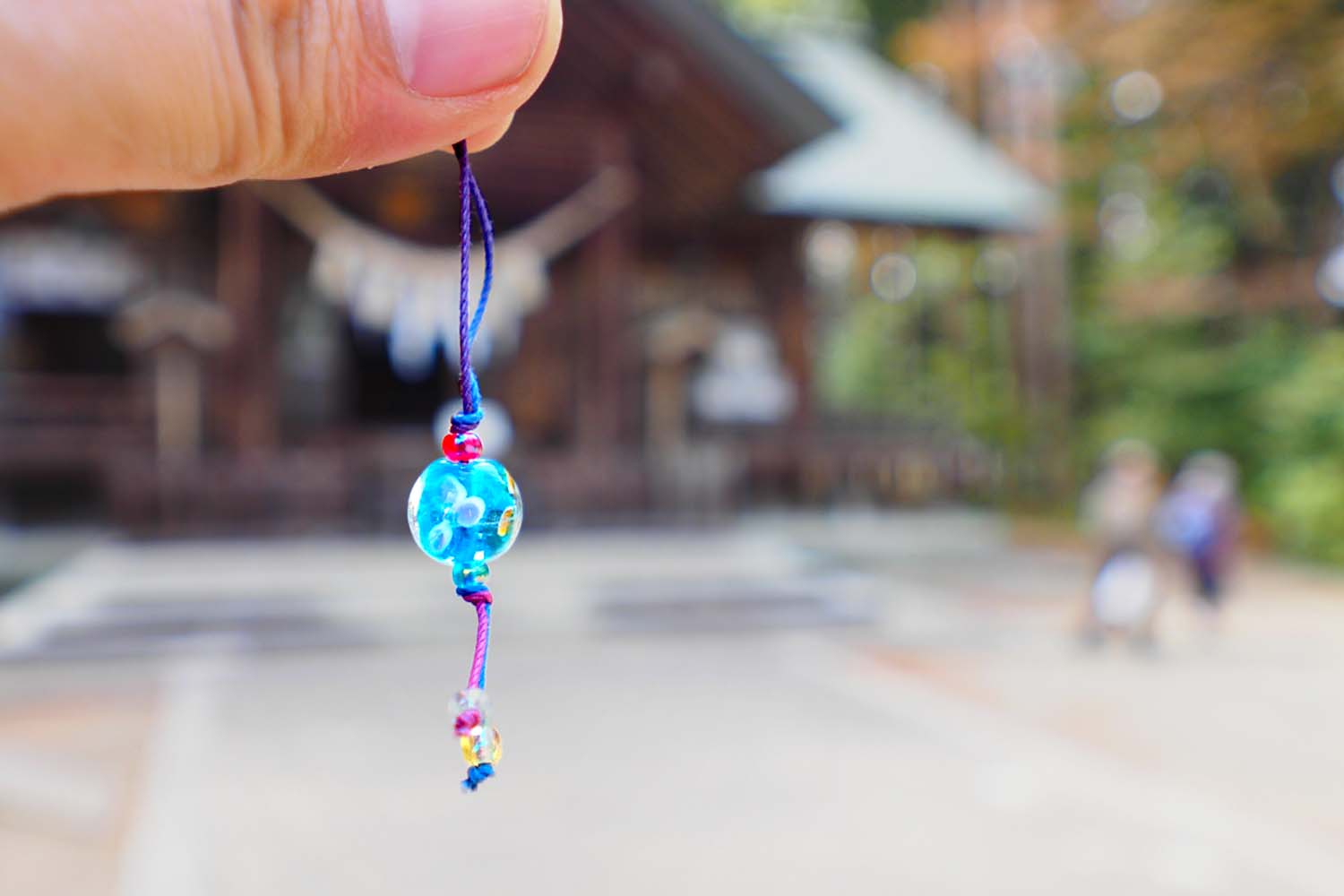
TomboDama is an old Japanese term for small, decorated glass beads.
Their size ranges from a few millimetres to, at most, around two inches. The mysterious patterns and brilliance contained within these half-inch glass beads never fail to captivate the beholder.
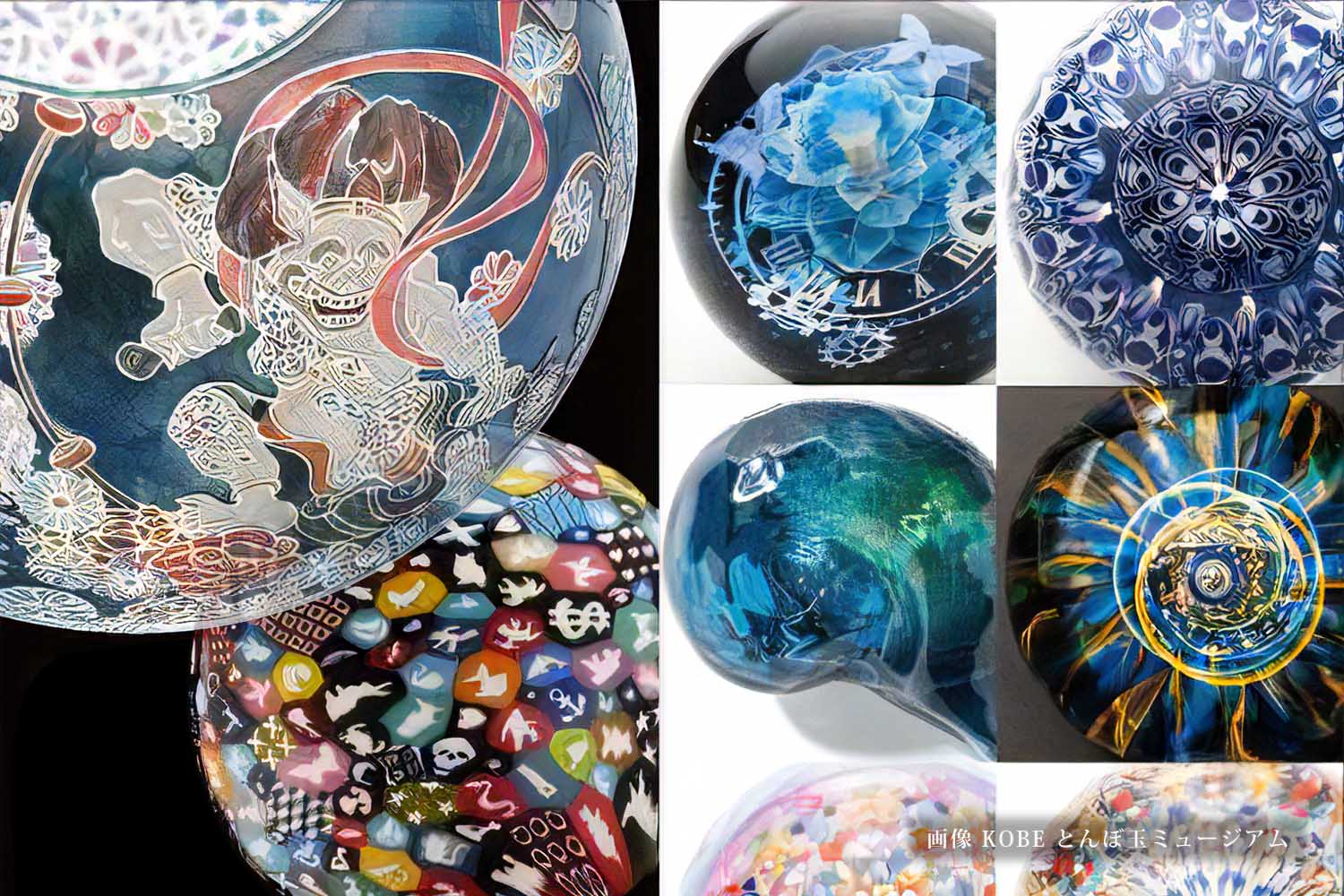
Within the chicly lit interior, TomboDama, pendant tops, paperweights, and glass cups are displayed here and there, illuminated by a mystical glow. When visiting this museum, you may find yourself captivated by the illusion of being in the cosmos.
Looking back at the global history of glass, it is said to date back some 4,500 years to the Mesopotamian civilisation. One might call it the material world’s super long-running star, sharing humanity’s journey for 4,500 years. (Various theories exist regarding its age and place of origin.)
It is said that the earliest glass was discovered by chance during the smelting process of metal refining. It was extremely small, contained many impurities, and had a cloudy colour. Over time, manufacturing techniques advanced, enabling the creation of glass with greater transparency and increased strength.
In ancient times, being an extremely precious commodity, its uses were limited. It was the property of the nobility, serving as small windows in symbolic buildings, as decorative items akin to jewels, and as a vital commodity in trade.
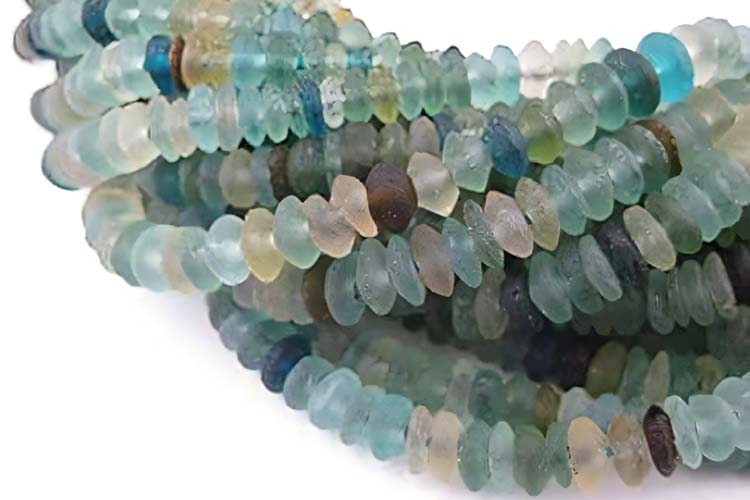
It is said that glass first arrived in Japan around the 1st century BC, with numerous examples discovered at ancient sites across the country.
It is believed to have been transmitted from Egypt, then a thriving centre of glass production, via the continent. While a basic trade route existed some 2000 years ago, it is remarkable that such goods made their way across the sea in an era when navigational technology was still rudimentary.
Naturally, upon its initial arrival, glass was treated as a precious commodity, yet the technology for domestic production was absent. It was not until the Edo period that the techniques for its manufacture were acquired, enabling domestic production to commence. Over time, increasingly sophisticated glassware came to be produced.
Small glass ornaments, already produced and used throughout the world, began to be manufactured in Japan during this period. Japanese aesthetics were incorporated, leading to the development of decorative techniques known as “suji” (ribbed), “ganki” (geese-step), “kogake” (powdered finish), and “hotaru” (firefly).
By the 19th century, the production techniques and decorative arts of TomboDama were temporarily lost due to the influence of the Meiji government’s “Luxury Prohibition Order”.
However, driven by the passion of artisans and many others who lamented the loss of its beauty, the revival of these lost techniques was achieved from the 1950s onwards.
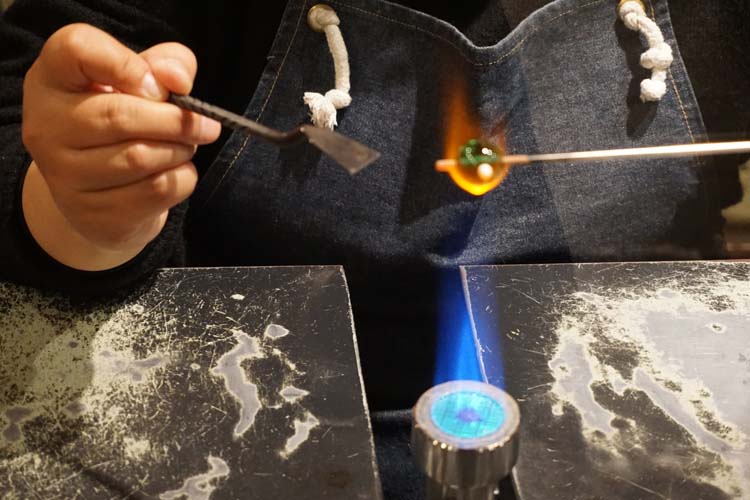
Even today, TomboDama are not widely used in society. This is because daily life proceeds without difficulty even without them. Yet precisely for this reason, TomboDama possess the power to bring moments of tranquillity to the fleeting instants of everyday existence.
More than many other artworks, they offer solace and the space for reverie within life.
Within the field of glass craft, which boasts many artists, those involved in TomboDama production occupy a unique position, continually presenting new works.
In recent years, works known as “Art Marble” – reminiscent of TomboDama combined with exquisite marbles – have gained popularity, and the refinement of their beauty shows no sign of abating.
Should you ever find yourself in Kobe, do recall the small museum tucked away in a corner of a building. You will surely be captivated by the half-inch microcosms you encounter there…
『KOBE TomboDama Museum / KOBE Lampwork glass Museum』Official website