
The Niyodo River – One of Japan’s Purest Streams
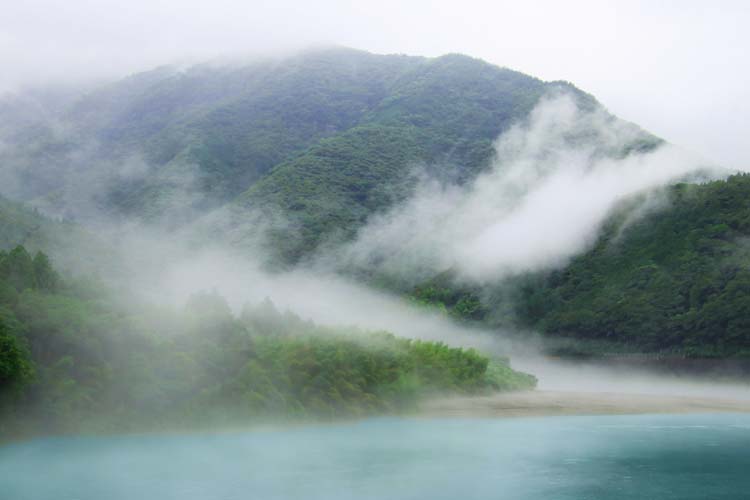
Flowing diagonally across central Kōchi Prefecture from the north-west to the south-east, the Niyodo River eventually reaches the Pacific Ocean near the coastal city of Tosa. Originating from Mount Ishizuchi, the highest peak in Shikoku, the river stretches for around 120 kilometres and is renowned for having some of the cleanest water in Japan, ranking first nationwide for several consecutive years between 2012 and 2016.
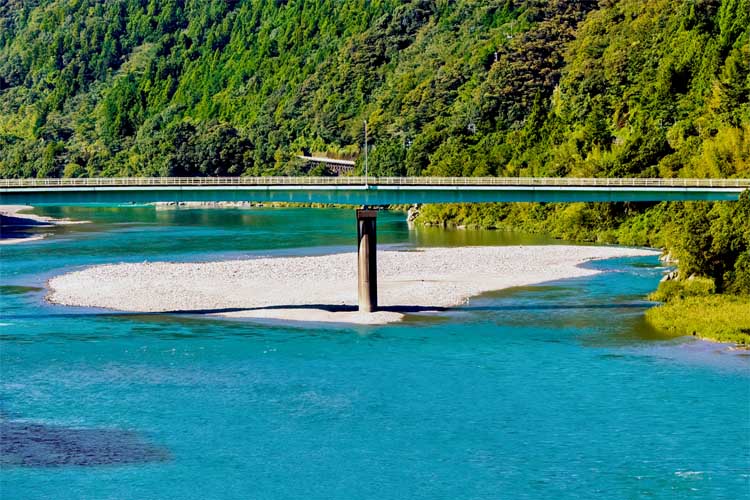
Its remarkable clarity has earned it the nickname “Niyodo Blue”, a term used to describe the river’s almost luminous blue hue. Beyond its use for irrigation, hydropower, and daily life, the river has long been treasured by local communities. In ancient times, its waters were used to brew sacred offerings for the gods, and the river was once known as “Miwa-gawa”, meaning “the divine river”.
The Mystical Pool of Niko-buchi
Among the scenic spots associated with the Niyodo Blue, Niko-buchi, located in the town of Ino in Agawa District, is perhaps the most iconic. This small pool, only a few dozen metres across, lies deep within a steep valley where sunlight often struggles to reach. Yet when the sun rises high enough to illuminate the water, the pool glows with an almost supernatural blue. Its sacred atmosphere once led people to believe it was the dwelling place of a dragon deity, and the area was considered off-limits for many years.
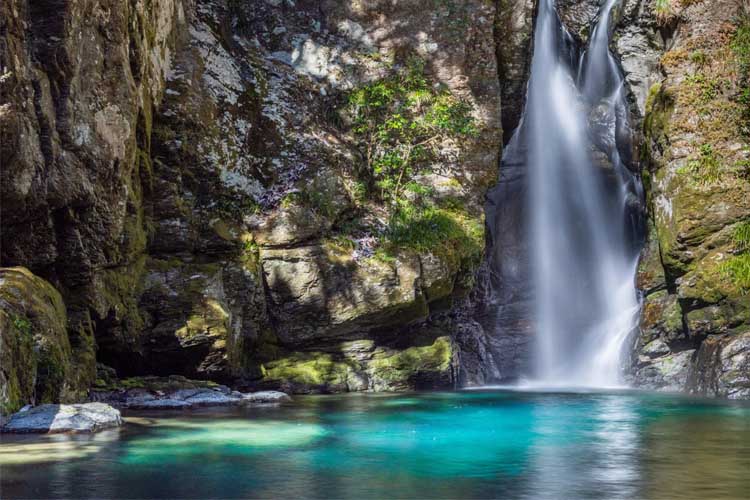
Interestingly, Niko-buchi is not on the main Niyodo River but on a tributary called Kami-Yakawa River, and even further upstream on a smaller branch known as Edagawa River—both unusually named with the character for “river” repeated.
Ino Town – Forests, Water, and the Birthplace of Tosa Washi
The town of Ino (formerly Ino Town) is surrounded by deep forests and clear streams that evoke the sacred landscapes of old Japan. While much of the area is rural, its southern part borders Kōchi City, making it one of the more populous towns in the prefecture and a place where nature and convenience coexist.
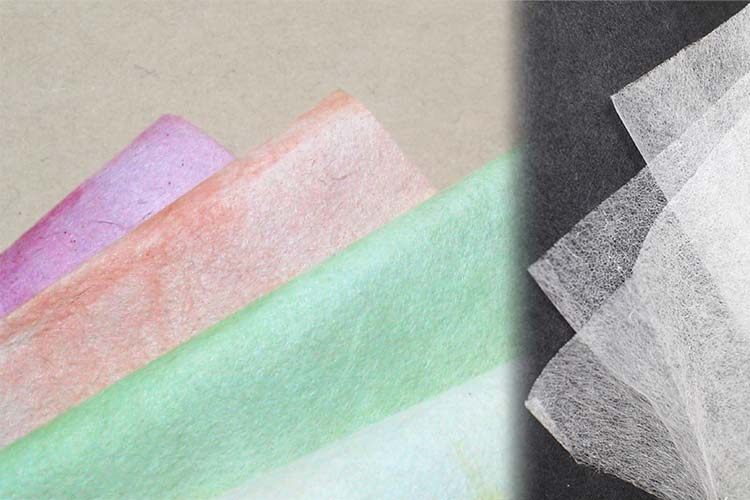
Ino is best known for its traditional craft: Tosa Washi, one of Japan’s three most celebrated handmade papers, alongside Echizen Washi (Fukui) and Mino Washi (Gifu). Made primarily from kōzo (paper mulberry), mitsumata, and gampi, Tosa Washi is prized for being thin yet exceptionally strong, with a wide range of textures and colours.
The Extraordinary Strength of Handmade Japanese Paper
Tosa’s finest paper, Tosa Tengujōshi, is astonishingly thin—just 0.03 to 0.05 mm, often compared to the wings of a mayfly. Despite its delicacy, it is incredibly durable and stable, making it ideal for restoring artworks and historical documents. Its longevity is legendary: the oldest surviving Japanese paper, dating back over 1,300 years, is preserved in the Shōsōin Repository in Nara.
While Western paper developed through mass production using wood pulp, Japanese paper relies on long plant fibres and is traditionally made by hand. Its strength made it suitable for everything from sliding doors and umbrellas to lanterns and fans.
A Craft with Over a Thousand Years of History
Tosa Washi is believed to have originated in the Heian period, as recorded in the ancient legal text Engishiki. Recognised today as a National Intangible Cultural Property and a Traditional Craft, it continues to be produced with great care. However, as traditional Japanese architecture and calligraphy decline, demand has fallen, and the number of papermakers has decreased sharply.
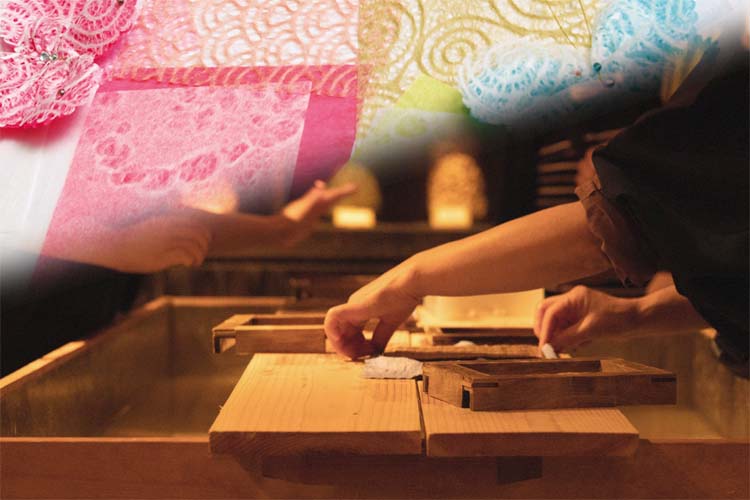
During the early Edo period, papermaking flourished in Ino, with products such as Tosa Seven-Coloured Paper even presented to the shogunate. At its peak in the mid-20th century, hundreds of workshops operated in the region. Today, only a handful remain.
Supporting the Future of Tosa Washi
Although machine-made paper now dominates the market, artisans dedicated to handmade washi continue to innovate, exploring new uses and designs suited to modern life. Local and national governments also provide support, and two key facilities in Ino Town help preserve and promote this heritage.
Roadside Station: Tosa Washi Craft Village “Qraud”
Located beside the Niyodo River, this “experience-based roadside station” offers hands-on activities such as washi lantern and postcard making, as well as outdoor recreation including fishing, canoeing, rafting, cycling, and riverside walks. The site also features an art gallery, a restaurant serving local ingredients, a spa with open-air baths and sauna, and accommodation. It serves as an excellent base for exploring Ino, including Niko-buchi.
Situated closer to central Ino, this museum—built in a style reflecting local traditions—provides a detailed introduction to the history and techniques of Tosa Washi. It also hosts triennial exhibitions and events exploring the future of washi. Visitors can enjoy a beautifully curated shop and even try papermaking under the guidance of skilled artisans.
A Journey into the Origins and Future of Japanese Paper
Once reserved for nobility, later woven into everyday life, and now facing the challenges of modern times, washi continues to survive through the dedication of its makers. Visiting Ino to explore the roots and future of Tosa Washi offers a meaningful glimpse into a craft that has shaped Japanese culture for centuries.
As a final note, there is a traditional tale associated with the origins of Tosa Washi: “Kamisuku no Sato”, the story of the nun Yōhoni, said to be the wife of local lord Hakawa Kiyomune and sister of the famed warlord Chōsokabe Motochika. Forced into exile during turbulent times, she is remembered in legend as a key figure in the birth of papermaking in Tosa.
The story is available in Japanese on YouTube: