
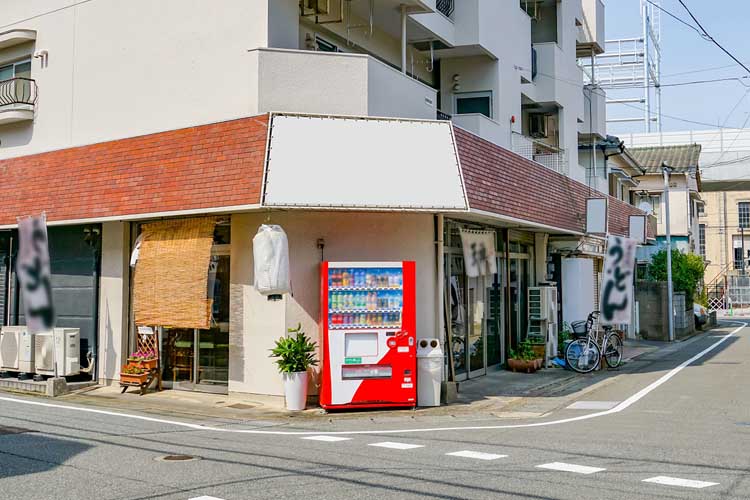
They are scattered throughout many street corners in Japan.
While their numbers inevitably decrease in regional areas compared to cities, you will still find several if you keep walking in any town with a reasonable population.
In Japan, they are called ‘Jido-Hanbaiki’.
‘Jido’ means automatic, and ‘Hanbaiki’ means vending machine.
As the Japanese often favour abbreviating words, they are also affectionately called ‘JiHanki’.
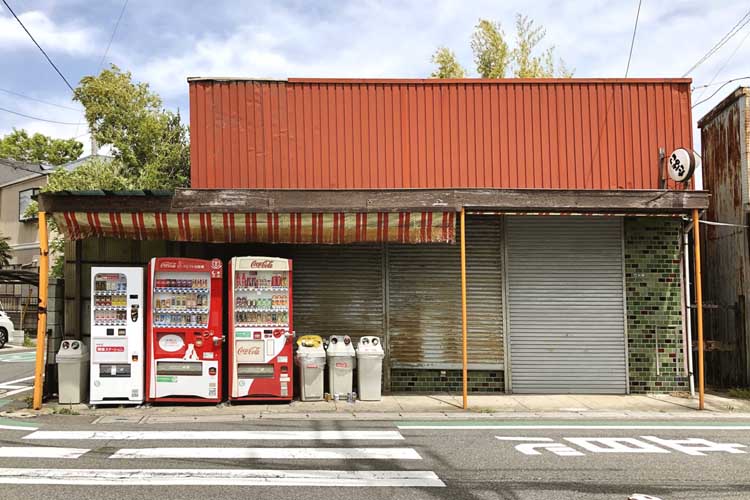
The foodstuffs and daily necessities required for everyday life are purchased at supermarkets and department stores, so they are rarely obtained from vending machines.
Nevertheless, for the Japanese, vending machines are a very familiar and easily accessible presence, like an old acquaintance.
During business trips, on the way home from school, whilst out shopping or sightseeing, vending machines offer a convenient way to quench a parched throat in the heat or warm a body shivering in the cold. For the Japanese, they are an ordinary presence, always ‘there’.
Yet, for overseas travellers, Japan’s vending machines sometimes deliver an impact far beyond that of mere ‘drink-buying machines’.
Why are they so ubiquitous? Why do they endure outdoors without being vandalised? And why do so many machines still demand cash? Perhaps this phenomenon encapsulates the unique culture of Japan and the essence of the Japanese character.
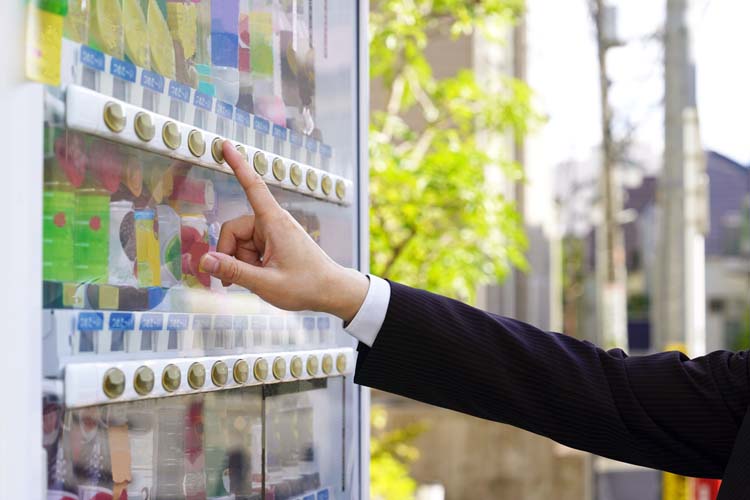
The number of vending machines installed in Japan is said to be approximately 4 million units (including non-beverage types), boasting a penetration rate among the highest in the world when measured per capita.
However, what is truly astonishing is not the number of machines, but their ‘location’.
In quiet back alleys, on country roads without streetlights, or even atop Mount Fuji at 3,776 metres above sea level. Wherever they are placed, it is extremely rare for these vending machines to be vandalised or for the cash inside to be stolen.
Could this be considered a ‘litmus test of trust’, symbolising Japan’s excellent public safety?
For the Japanese, the sense of not damaging public property or respecting others’ possessions is deeply ingrained through education and social norms. The sight of vending machines operating unperturbed outdoors speaks more eloquently than words about how Japanese society is built upon ‘mutual trust’.
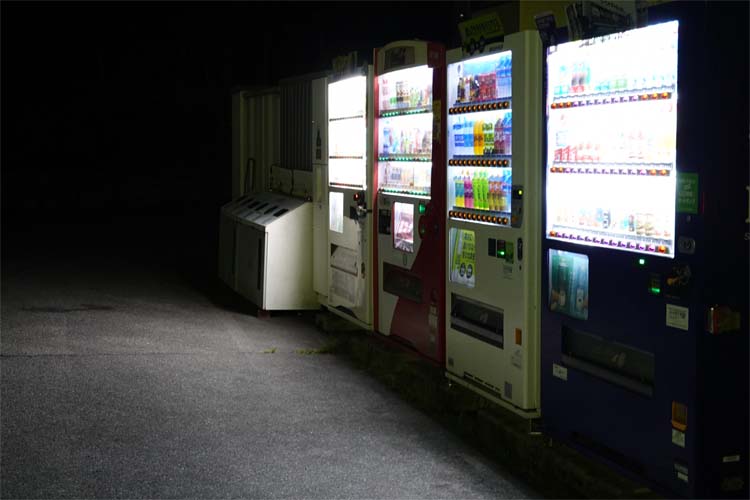
Moreover, Japanese vending machines possess unique characteristics not only in their prevalence but also in their form.
The sight of ice-cold cola and piping hot canned coffee side by side within the same machine is a rare feat of engineering globally.
By maximising energy efficiency—such as utilising waste heat from cooling for heating—while perfectly managing the ‘ideal drinking temperature’ according to the season, this attention to detail reflects the Japanese ‘perfectionism’.
Come winter, vending machines stock ‘sweet red bean soup’ and ‘corn potage’, and sometimes even ‘canned oden’ and ‘dashi stock’. It is through these changing vending machine line-ups that the Japanese sense the passing of the seasons.
Moreover, recent additions include ‘frozen ramen’, ‘freshly squeezed orange juice’, and even ‘insect-based foods’, meaning vending machines now serve much like small shopping streets.
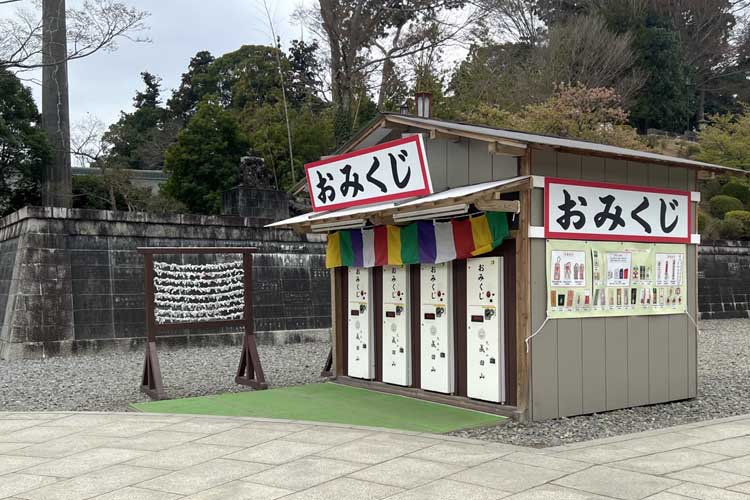
At one particular shrine, there is even an “omikuji vending machine”.
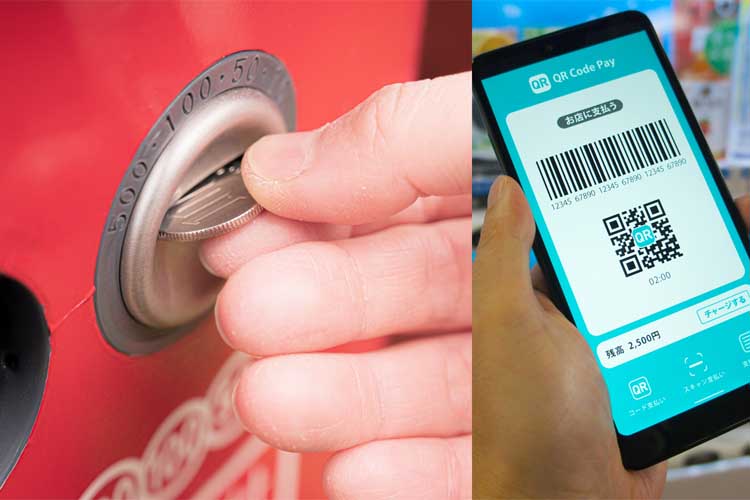
One factor driving the proliferation and diversification of these vending machines is the Japanese preference for cash.
Although cashless payments are rapidly advancing in Japan with the times, the level remains considerably lower compared to other developed nations.
Why do the Japanese persist in using cash in this era?
As cashless payments become the global norm, many people in Japan still rummage through their wallets for coins at vending machines. This scene is deeply rooted in the Japanese character and history.
・ Trust in tangible value
Traditionally, the Japanese place great importance on physical objects. There is a disposition to find reassurance in the weight of coins held in one’s hand rather than in digital figures. Vending machines, in particular, have provided an extremely simple and reliable experience for decades: quenching one’s thirst with two 100-yen coins.
・Crisis management in a nation prone to disasters
Japan is a country frequently struck by natural disasters such as earthquakes and typhoons. When large-scale power outages or system failures occur, digital payments risk becoming inoperable. Yet with cash, one can still make purchases.
For the Japanese, “carrying cash” is recognised as a form of safety net. The sound of change clinking back from a vending machine is also a sound of trust in the system.
These tendencies among the Japanese may conversely be an expression of distrust towards “electronic money that cannot be physically felt”.
As mentioned several times in previous articles, Japan as a nation may indeed be “Galápagos-like” in various respects…
Finally, a few points to note when using vending machines during your visit to Japan.
Rules for waste bins: Recycling bins are often placed beside vending machines. These are exclusively for empty cans, bottles, and PET bottles purchased from that particular machine. Please be mindful that disposing of other types of waste here is considered poor etiquette.
New and old coins: New coins introduced in 2021, such as the new 500-yen coin, may not be accepted by older vending machines. In such cases, please try using a thousand-yen note.
Checking your change: Japanese vending machines are highly accurate, though coins may occasionally jam. Contacting the management company’s telephone number displayed on the machine is the correct approach, though this may present a slight hurdle for tourists. If the vending machine is located near a convenience store, consulting a member of staff there is another option. (Consider using a smartphone translation app.)
Japanese vending machines are not merely machines for selling goods. They embody Japanese culture itself – a blend of good public order, a passion for technology, and a stubborn trust in cash that borders on the slightly clumsy.
Not just when you’re thirsty, but pause for a moment and gaze upon their gleaming panels. There, quietly breathing, lies the ‘tranquillity of daily life’ that the Japanese hold dear.
Insert a coin, press a button. In that instant, you too are touching a part of Japanese culture.

P.S.: Vending machines on Mount Fuji’s summit are transported by bulldozer over several hours. The steep price of ¥500 per bottle is accepted by climbers as a tribute to the arduous logistics involved.(^^)
→Coca-Cola Bottlers Japan Homepage (Japanese)