
In the first part, prompted by the phrase ‘Say nothing, ask nothing’, we introduced Shugendō, a religious ascetic system transmitted in Japan for 1,400 years.
While grounded in nature worship, Shugendō was constructed by incorporating elements of mountain religion and Buddhism. It was a philosophy that placed paramount importance on the practice of asceticism within nature. “Practise first, before you speak. Then learn and perceive from that” is the true essence of Shugendō.
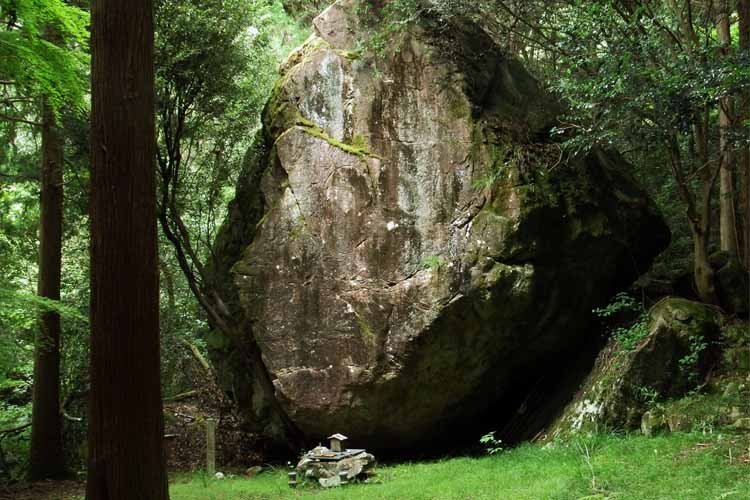
The ascetic practices of Shugendō, which sometimes involved risking one’s very life to attain the heights of faith, were an extremely rigorous discipline and solitary training. Precisely because of this, to ordinary people, those who pursued it appeared like superhuman beings inhabiting a world utterly cut off from the rest.
All the more so, En no Gyōja, the founder of Shugendō, was even thought to be a being possessing powers akin to those of the gods.
Ultimately, even strange and amusing anecdotes, seemingly diverging from the true essence of Shugendō, came to be created…
Buddhism holds a particularly significant place among Japan’s religions. Introduced from the Asian continent in the 6th century, Buddhism has continued to the present day, interacting with the pre-existing Shinto religion and giving rise to Shugendō.
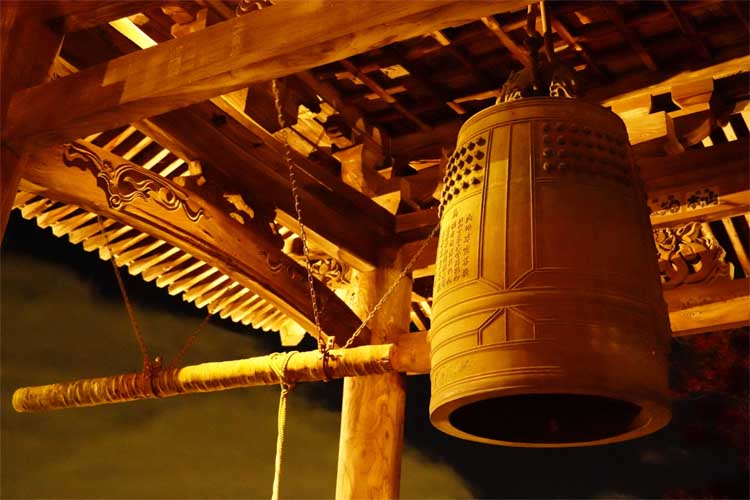
One characteristic feature of Japanese temples is the large hanging bell found within their precincts.
Even the smallest bells weigh several hundred kilograms, while the largest are colossal bells weighing up to 30 tonnes, suspended within the temple’s bell tower.
These bells have long been revered instruments for producing the sound that conveys the essence of Buddhism. Simultaneously, in an era without clocks, they served the vital function of announcing the time. In Japan, the hanging bell symbolises the temple itself; temple and bell were inseparable entities.
However…
Premise: The word for “bell” in Japanese is “Kane”. Similarly, the word for “money” is also pronounced “Kane”. Although their meanings are entirely different, they happen to be homophones with the same pronunciation.
『En no Gyōja and the Flying large Bell』
Once upon a time, there was a temple called Chōfuku-ji in Harada Village, Shizuoka Prefecture.
It was some time after the previous head priest had passed away and the new head priest had taken up his post…
One day, an elderly traveller came to the temple.
The man was shabbily dressed and looked terribly emaciated, as if he hadn’t eaten for days. Yet, strangely, his complexion was good, his voice clear and resonant, and he seemed full of vigour.
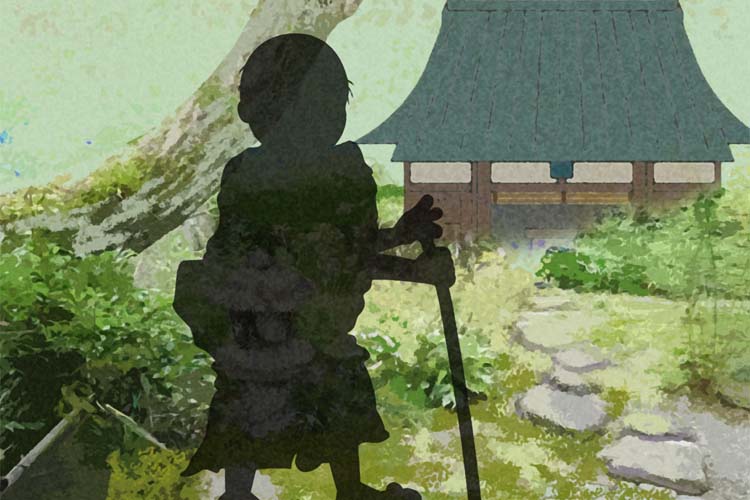
‘I’m terribly sorry, but…’ the old traveller began.
‘I’m on a pilgrimage to Mount Omine in Nara, but my funds(Kane) have run out.’
‘Would you be so kind as to spare me a little…’
At that moment, the head priest of Chōfuku-ji was playing his beloved game of Go with a friend…
‘Kane…? This temple is as poor as it looks. The only thing here with “Kane” in its name is the great bell hanging in the bell tower. If you want it, take it.’
He answered curtly, not even glancing at the old man.
This abbot, though not a bad man, was somewhat careless and occasionally spoke inappropriately.
Or perhaps he felt his beloved game of Go had been interrupted…?
However, the old man gave an unexpected reply.
‘I see… In that case, I shall take it.’
What utter nonsense are you spouting?
At that moment, the abbot and his friend turned towards the old man for the first time, only to witness an utterly astonishing sight.
The old man had single-handedly removed the enormous bell from the belfry – a bell that would have required fifty men to budge it – and was now carrying it effortlessly upon his slender shoulders.
‘…’
The abbot and his friend were utterly speechless at this astonishing event. Their mouths remained agape nonetheless…
Then, as if stirred by a sudden gust of wind, a whirlwind swirled before their eyes. With a booming clang, the bell and the old man rose into the air, soaring high into the sky before vanishing from sight…

When the head priest suddenly came to his senses, the bell tower had already become nothing more than a shelter from the rain.
Hurrying to follow him out into the garden, the bell and the old man had already vanished into the distant sky, far off towards the western mountains…
That evening, a fierce wind blew through the village of Ōmine in Nara Prefecture, some 200 kilometres from Shizuoka.
It was like a storm. The villagers, wondering what on earth had caused such weather at this time of year, were terrified and stayed indoors.
The next morning, the wind had died down and it was a clear, fine day. The villagers were all talking about what on earth last night’s wind had been, when suddenly, one villager turned pale and cried out.
‘Blimey! What on earth was that!?’
Looking in the direction he pointed, they saw something large caught upon the rocks of the sheer cliff at the mountain’s summit.
What on earth? What on earth? they all wondered, and went to take a look.
And what do you know? It was nothing less than the temple’s great bell…
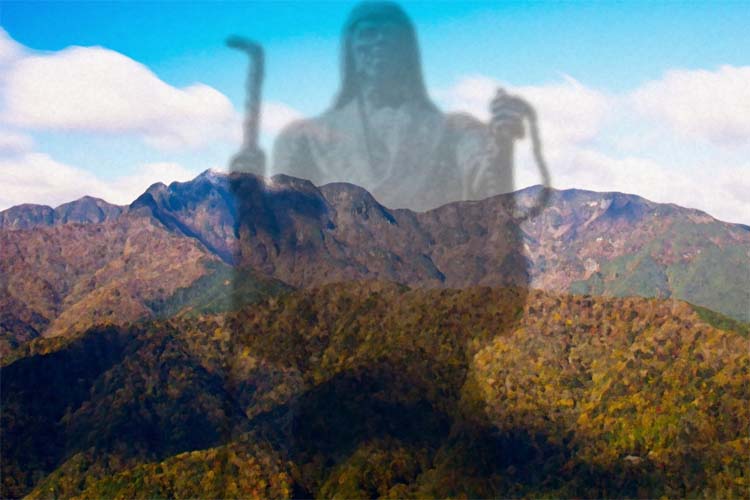
Who could have brought such a thing here? Or did it fly in from the sky, perhaps?
We all discussed it at length, but came to no conclusion.
Soon, a village official who had received word arrived. While examining the bell, he discovered an inscription carved beside it.
It was said to read:
【Harada Village, Sano District, Tōtōmi Province. Bell of Chōfuku Temple. 2nd day of the 6th month, 7th year of the Tenkei era】
The elderly gentleman featured in this tale, who rides a bell on a 200-kilometre journey through the skies, is said to be En no Gyōja, the founder of Shugendō.
En no Gyōja means “the ascetic named En”. Officially known as En no Ozuno, he is said to have been a Shugendō practitioner who existed around the 7th century, though as a legendary figure, details about him remain unclear.
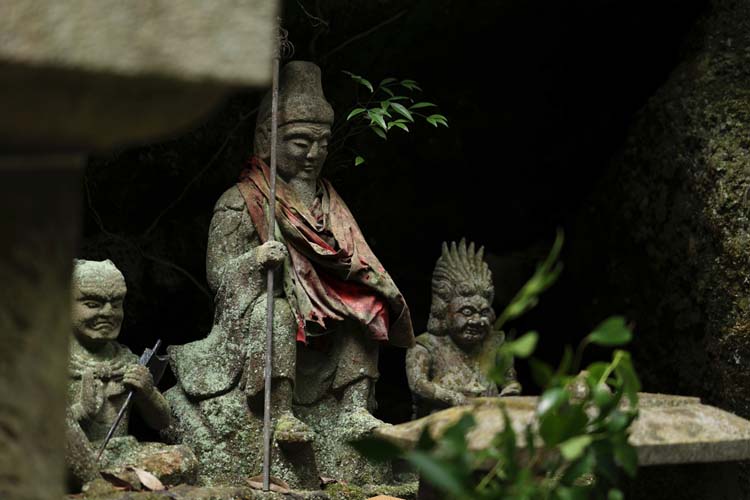
The temple’s great bell, central to this folk tale, bears the inscription “7th year of the Tenkei era”, suggesting the story dates from at least the 10th century onwards.
Having transcended 300 years of time and space to demonstrate his supernatural powers, did En no Ozuno find his journey through the skies a comfortable one…?
Whilst writing this article, I recalled the Christian tale of “Jesus Christ and the Fig Tree”.
Jesus’ words to the fig tree – “May no one ever eat fruit from you again” – are said to have pointed to the spiritual corruption of the priests of that time. I sense a similar undertone in this story of En no Gyōja and the temple bell.
Japanese Buddhism and Shugendō were not entirely sacred throughout their thousand-plus years. There were not a few who, unable to endure the rigours of Shugendō, fell away and became thieves, or who, though temple monks, drowned in wine and women, living debased lives. This folk tale may well have contained a condemnation of such behaviour…
Of course, many religious figures around the world likely spend their days with devout reverence for the gods and compassionate care for the people.
Yet those who serve in such roles are, after all, human beings—creatures possessing both strength and weakness. Perhaps the story suggests that the gaze directed towards the gods and the people should always be turned towards oneself as well…
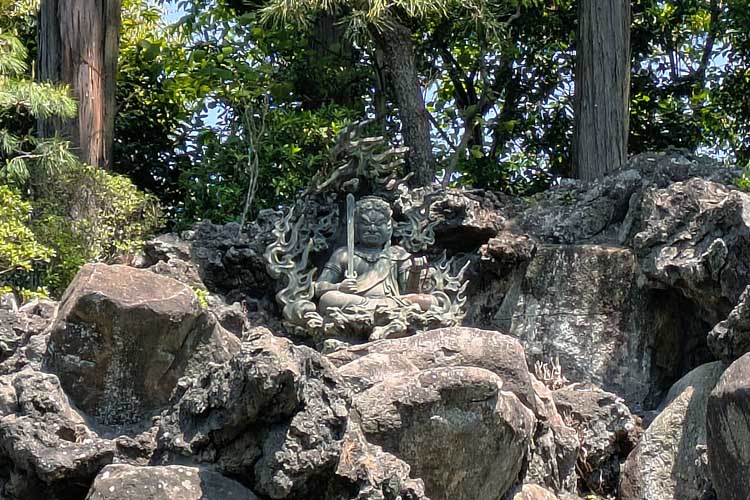
Chōfuku-ji is a real temple that still stands today in Kakegawa City, Shizuoka Prefecture.
This folk tale forms part of the temple’s history, and as a cautionary reminder of the incident, the temple still does not have a large bell installed within its grounds. It is known nationwide as a rare “temple without a bell”.
And then…
It is said that Ōminezanji Temple, located at the summit of Ōmine Mountain in Amagawa Village, Yoshino District, Nara Prefecture, still possesses a large bell said to have flown there from Chōfukuji Temple in Shizuoka.
Could it be that, as the legend suggests, it truly did fly there…? (^_^;)