
“Say nothing, ask nothing”
These are profoundly meaningful and weighty words.
Yet they seem diametrically opposed to the modern world’s tendency towards codification, quantification, institutionalisation, and intolerance of the unknown. After all, being told “say nothing, ask nothing” could easily give the impression of being closed-minded or even dictatorial.
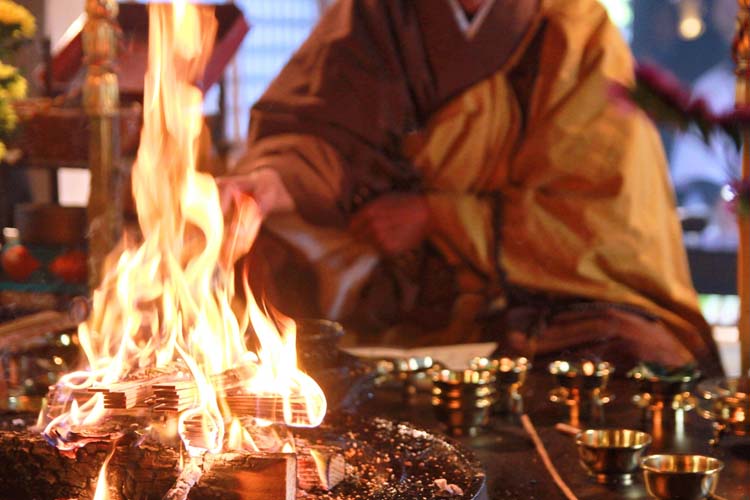
However, this phrase embodies the core philosophy of Japan’s Shugendō, a tradition with a history spanning 1,400 years…
(Shugendō:The Path of Ascetic Power)
Shugendō is a religious ascetic system founded in the latter half of the 600s AD by the ascetic En no Gyōja.
As En no Gyōja himself is a legendary figure, there are no clear records of his founding or extant texts; nevertheless, his charisma is still revered within Shugendō to this day.
What kind of religion is Shugendō?
In truth, although termed a religion, Shugendō possesses neither a clear religious organisation nor religious precepts. This is because, much like Japanese Shinto, it respects the spontaneous faith and self-discipline of the individuals involved.
This is also why it was described above as a ‘religious training system’.
However, the training within Shugendō was by no means free and unrestrained.
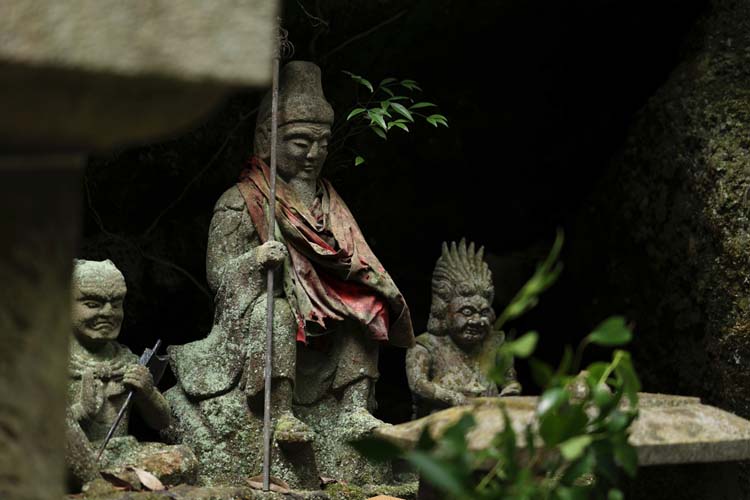
Buddhism was introduced to Japan from the Asian continent in the mid-6th century. As Buddhism subsequently took root in Japan, it became intertwined with the indigenous Shinto beliefs, giving rise to a uniquely Japanese religious sensibility.
Furthermore, Japan has long possessed a religious sensibility centred on “veneration of mountain deities”.
Shugendō is a religious concept born from the fusion of Buddhism, Shinto, and mountain worship. It is a form of ascetic practice aimed at attaining supernatural wisdom and abilities through imposing rigorous self-discipline within nature.
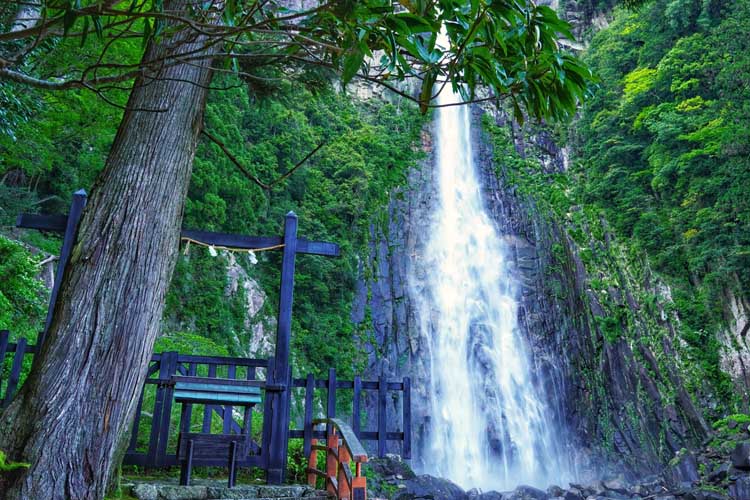
Venturing deep into the mountains, subsisting on nuts and water from waterfalls, they traversed pathless terrain for days on end. They purified body and mind beneath the cascading waterfall, unifying their spirit. They undertook fasting, abstaining from food and water to control primal human desires. They kindled immense fires, concentrating their minds to perform sacred rites and prayers.
These constituted the fundamental ascetic practices of those undertaking Shugendō.
And this training sometimes extended to the practice of “捨身 / Shashin” – the self-sacrifice that demanded even the offering of one’s own life.
Shashin is death itself; there is no return to life. It was considered distinctly different from suicide. It was believed that the martyr, by passing through death, cast off all egoic attachment and was reborn as a divine being to save others…
Such rigorous ascetic practices are not unique to Japan’s Shugendō but are observed in numerous religions and religious customs worldwide. The 2006 fictional film The Da Vinci Code depicted a shocking scene where a character inflicted wounds upon their own body using a spiked whip.
These ascetic practices, which could be interpreted as self-harm, transcend the values of ordinary people. However, the practitioners are not masochists; they seek, beyond the pain, a sense of oneness with the divine or saints, and the liberation of the soul from the cage of the physical body.
Japanese Shugendō, by performing these ascetic practices within nature, represents an attempt to transcend ordinary human values and assimilate into the world of the great gods of nature.
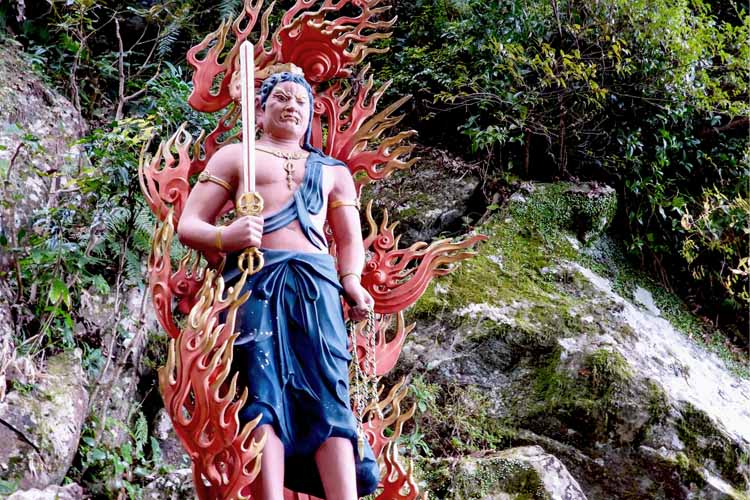
In Shugendō, the core of endeavouring to approach this divine realm is termed ‘practice’.
Put another way, it is not about ‘pondering various theories’, but rather the stance that ‘you must practise and act through ascetic training, learning from it and thereby attaining an understanding of the transcendent world’.
No matter how much one expounds with human values or ponders to understand something, it remains limited. There is something that becomes visible only by abandoning everything and immersing oneself in nature… such is the philosophy.
This is the meaning behind the phrase “Say nothing, ask nothing”, which also became the title of this article.
Although Shugendō possesses a systematic framework, as mentioned earlier, it lacks a clearly defined religious organisation. Consequently, it is recognised in modern times as a rather minor religious practice.
Nevertheless, Shugendō continues to exist uninterrupted to this day.
In some instances, it opens its doors to the general public, offering temporary experiential training sessions. I understand that in recent years, participants from overseas have also been taking part.
* However, whilst these are termed experiential events, they are by no means light-hearted pursuits but rather part of rigorous training. There is always a risk of injury or even life-threatening danger. Participants must never approach these events with a casual attitude.
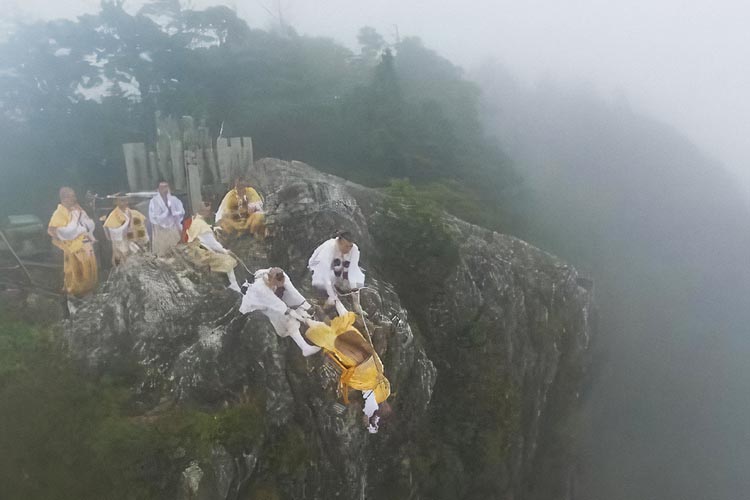
Image © Yoshino Visitors Bureau
Today I wrote about Japan’s Shugendō, though this piece has only touched upon about one-tenth of its scope.
Shugendō is an act of exploration pursued in a world apart from ordinary life. While it is a minority religious practice in modern times, its philosophy has profoundly influenced the Japanese collective consciousness.
Next time, I hope to convey another facet of Shugendō through folk tales that seem somewhat at odds with its ‘rigour’…