
Following on from last time, I’d like to continue introducing Japanese Yōkai.
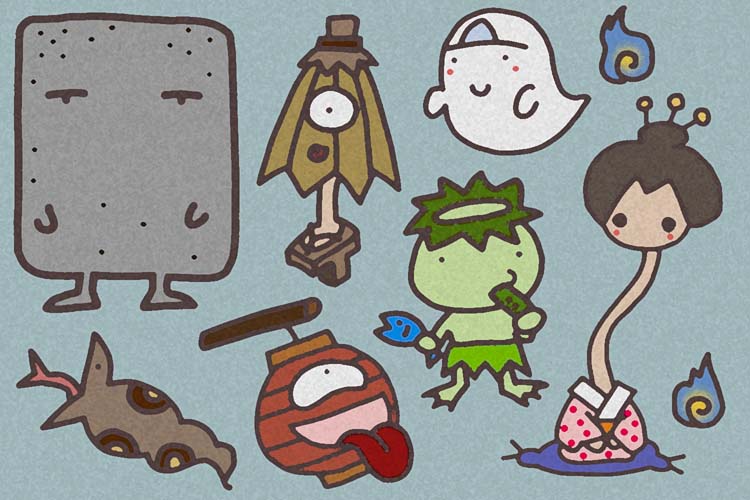
Rather than the cool ones like Ireland’s “Dullahan” or the “Griffin” from ancient Greek mythology, mentioned towards the end of the previous article, I’d prefer to prioritise the peculiar Japanese Yōkai – the ones whose very existence is baffling, and where you can’t even tell if they’re scary or not.
Though, judging by the portrait of the Dullahan painted by William Henry Brooke, one does get the impression of a somewhat unreliable or rather scatterbrained creature…(^_^;)
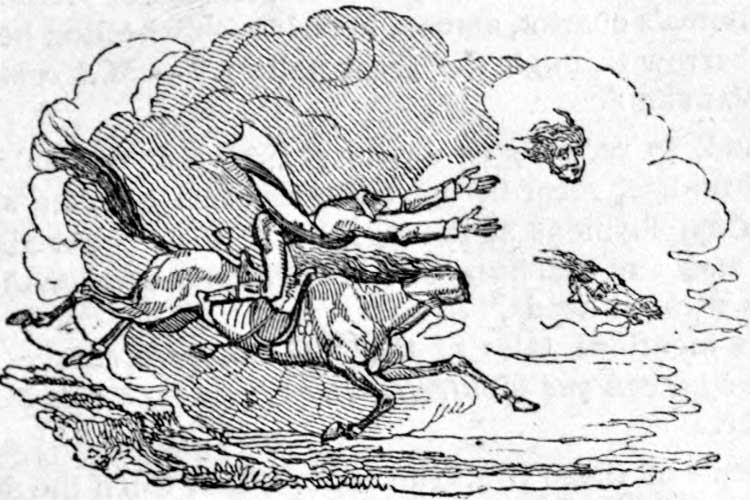
Perhaps these creatures aren’t solely defined by their frightening aspects…
Ittan Momen
Today’s first performer is Ittan Momen, a spirit made from a single piece of cloth.
In olden times in Japan, the kimono was the standard garment. This Yōkai takes its name from the unit of cloth required to make one kimono, known as one tan (ichi-tan). Momen means cotton.
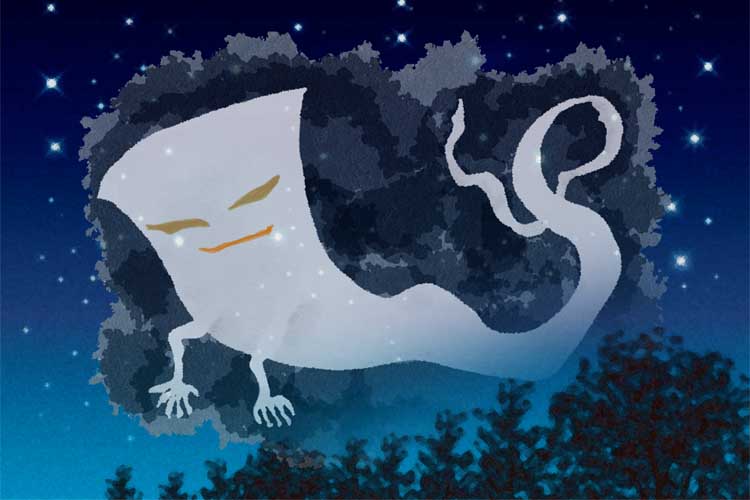
One tan measures approximately 37cm x 12m. It is said this size of cloth flutters through the air as it moves.
Saying things like, ‘Isn’t that just a piece of cloth blown by the wind?’ is strictly forbidden!
Ittan Momen is usually a quiet spirit, but if it hears such gossip and becomes angry, it is said to wrap its soft, long body around people and strangle them.
In times past, a “fear of nature and society” was often employed to discipline children.
It is said that when children became so engrossed in play that they forgot the day was drawing to a close, they would be admonished with the warning, “Come dusk, Ittan Momen will come and carry you off,” urging them to return home promptly.
It was believed that Ittan Momen would snatch the child bringing up the rear of the line returning home, so when the temple bell tolled (signalling evening), it was said they would all dash home, each trying to get there first…
Makura-gaeshi (the pillow flipper)
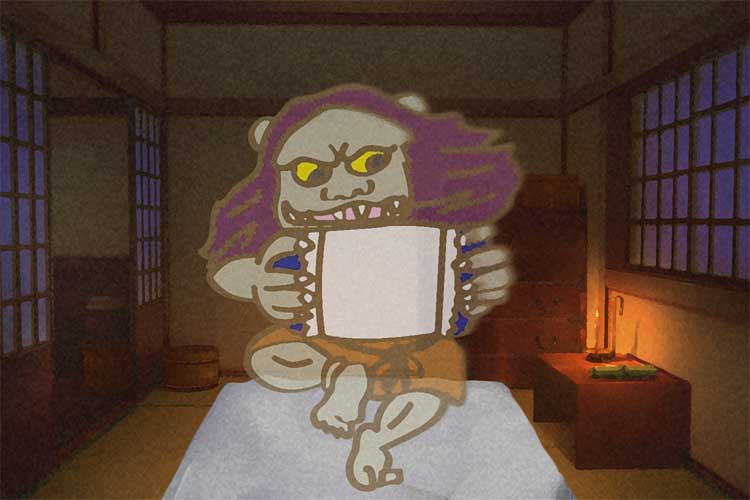
Just as the name suggests, exactly as it is.
It is said that when it quietly appears beside the pillow of someone sleeping at night, it turns the pillow over without anyone noticing and then departs…
It is said that occasionally, people sleeping are turned upside down.
‘That’s just you being a restless sleeper, isn’t it!’
While I consider that an extremely reasonable opinion, I must reject it here. It is the work of a supernatural being. It is undoubtedly a supernatural phenomenon. Believing this will lead to everyone’s happiness…
This peculiar Yōkai is rather baffling in its true intentions, but one thing does puzzle me.
The people of the Edo period, when this Yōkai tale originated, used pillows of a different shape to those we use today.
They sported distinctive hairstyles, famously known as the “chonmagé”, so their pillows were adapted accordingly. They used what was called a “box pillow” – essentially a pillow attached to a platform.
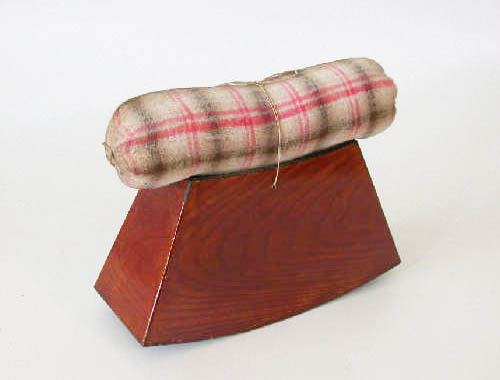
In other words, it couldn’t be turned upside down…
Perhaps it wasn’t a “pillow flipper” but a “pillow remover”…?
Nuppeppo (Blob man)
I’ve absolutely no idea what on earth this is.
It’s a lump of flesh. Or rather, it looks more like a lump of fat. A face is attached directly to a flabby, bloated body, with arms and legs sprouting from it.
It’s clearly not been looking after its health at all. Blood pressure also appears to be high.
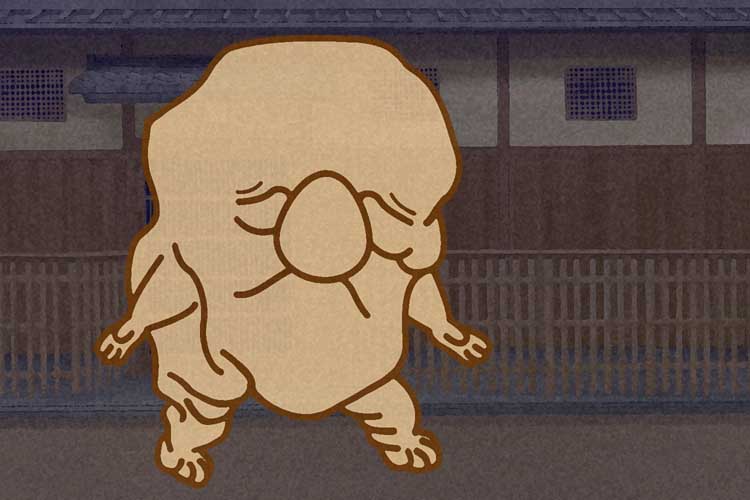
Much like the “Rokuro kubi” featured in the previous article, another well-known Japanese Yōkai is the “Nopperabō”. (It resembles a human in form but has no face, only a smooth, featureless surface.)
This might be a variant of that.
With its extremely slack appearance, it seems harmless at first glance, yet is surprisingly vicious. It is said to suck the fat from corpses dry, and sometimes even attacks and devours humans.
One might say it is a Yōkai that teaches us “never judge by appearances”…
DoumoKoumo (totally stuck)
This is today’s main event. One might say he’s an entertainer beyond imagination.
‘DoumoKoumo’ cannot be directly translated into English, but the closest impression would be ‘totally stuck…’ or perhaps ‘It’s beyond repair now.’…
・・ During the Edo period, there were two exceptionally skilled physicians.
They possessed such advanced techniques that they could cure any illness instantly and restore even the most severe injuries to their original state as if nothing had happened – skills that would put Dr. Black Jack to shame.
One day, these two decided to meet and test their skills against each other.
It was a match to see which of them possessed the more advanced technique.
The first match involved severing each other’s fingers, then demonstrating their ability to reattach them.
Both parties’ reattachment techniques proved so excellent that the wounds healed so cleanly the severed parts were indistinguishable, resulting in a draw.
The second match involved severing each other’s arms and reattaching them.
Once again, both demonstrated such excellent reattachment techniques that no winner could be declared.
In the third match, they finally engaged in a contest to sever and reattach each other’s heads.
Remarkably, the heads were successfully reattached once more, resulting in no clear winner.
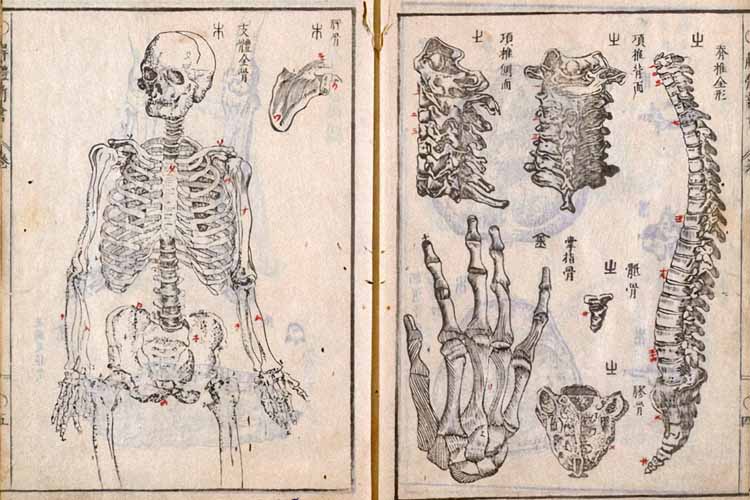
Frustrated that the match remained undecided, they attempted the head reattachment challenge once more.
However, they had become so overheated that both simultaneously severed the other’s head…
With no one left to reattach the heads, there was nothing more to be done…
And so the two doctors died.
Nevertheless, their overconfidence that “their own skills were superior” eventually turned into a grudge, and they became youkai.
Moreover, they took on a monstrous form with two heads atop a single torso…
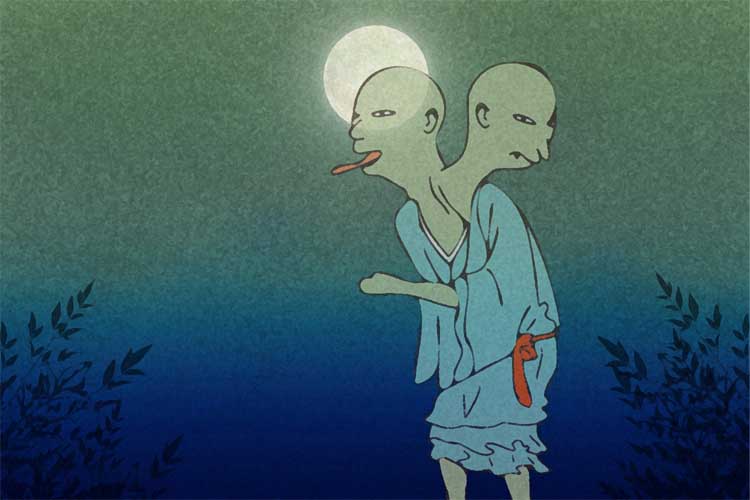
And it is said they appear before the sick or injured, attempting to treat them.
However, they constantly argue over the treatment plan, so the treatment never progresses at all.
At this point, it’s hardly about youkai anymore; it’s practically a comedy sketch…
Finally, as last time, let’s pick one from modern Japanese urban legends.
Toilet no Hanako-san (Hanako of the Toilet)
She typically appears in school toilets frequented by children up to their early teens.
It is said that if you knock on the third door from the entrance to the toilets on the third floor of the school building and call out, “Hanako-san, are you there?”, a faint voice will reply, “Haaai…” from within the toilet, where no one should have been present to begin with.
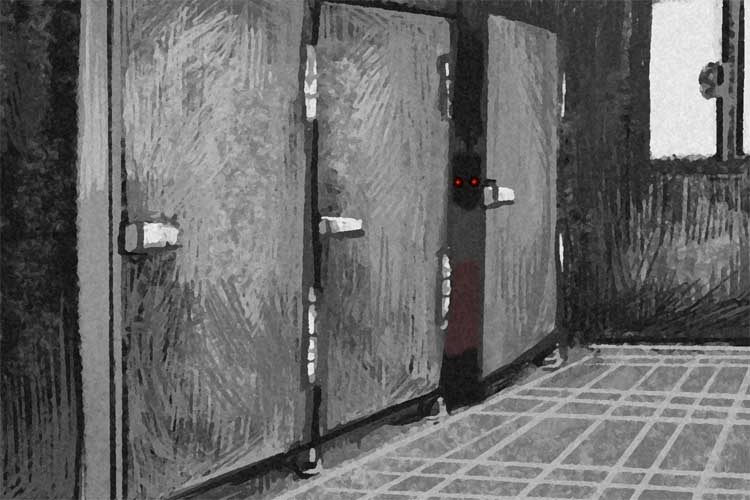
Upon hearing her reply, if you immediately leave the scene, no harm will come to you. However, it is said that if you open the door, Hanako-san inside will drag you in and carry you off to another world.
Hanako-san is recognised as typically appearing as a girl around ten years old, with simple bobbed hair, dressed in a white blouse and a red pinafore skirt.
This urban legend had already taken shape by the 1950s, gaining nationwide recognition during the occult boom of the 1970s.
However, upon deeper reflection, another figure emerges that seems to be the prototype for Hanako-san…
Whilst the toilet is a place of impurity, it has also been recognised since ancient times as a sacred space. This is because it is essential for human physiological functions and, in antiquity, was also a vital place associated with childbirth.
Consequently, around 100 to 200 years ago, there existed a custom centred on the deity Kawara-gami, worshipped as the god of the toilet, which encouraged keeping lavatories as clean as possible.
Furthermore, assigning this cleaning task to pregnant women in their stable period served a dual purpose: it expressed gratitude to the toilet deity, who also presided over childbirth, while simultaneously providing a measure of exercise for expectant mothers, who might otherwise become prone to inactivity.
Furthermore, Japanese mythology features the sister deities Haniyasu and Mizuha, who preside over the toilet and bodily functions.
Hanako-san is a modern-day female spirit, though one theory suggests she sometimes appears in the form of twin sisters.
In other words, Hanako-san, the toilet spirit, may also be seen as reflecting the form of deities venerated since ancient times…
As the sun dips below the mountain ridge and darkness begins to descend at twilight, this hour was called “Ouma ga toki” in ancient Japan. “Ou / Au” signifies “encounter”, “ma” denotes “demon”, and “toki” refers to the time of day.
It bears a resemblance to how “twilight time” in English-speaking cultures carries connotations of mystery, unease, and horror.

Yōkai and other supernatural beings, inhabitants of another world, emerge from beyond the darkness.
Yet their existence stems from the human mind’s natural reverence for the unknown, and they may at times be akin to deities themselves.
As long as humans exist in this world, both gods and demons shall endure…